
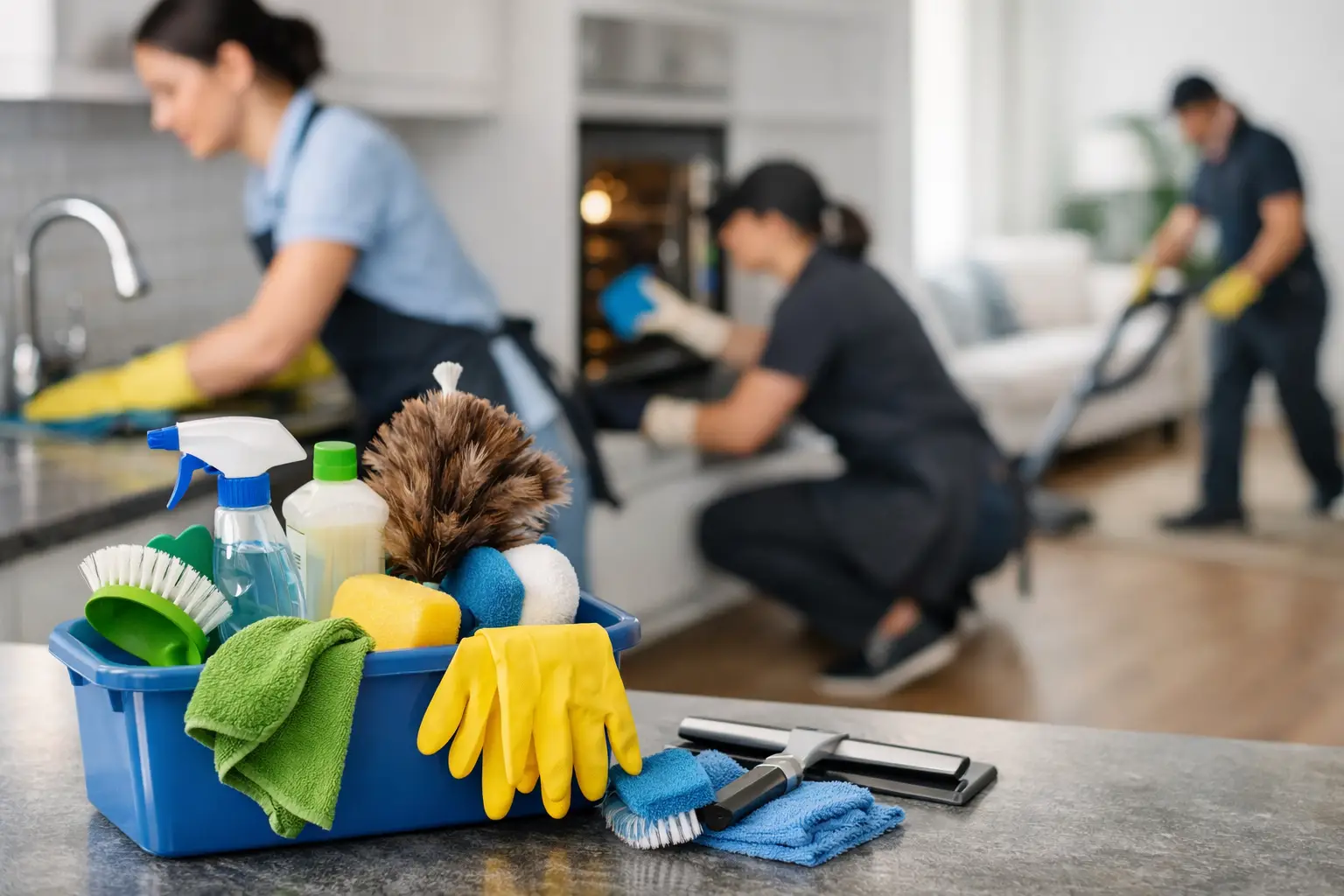
If your home looks decent on the surface but still feels off, you are probably not looking for a quick tidy-up. You are looking for a reset. That is exactly why people ask what is included in a deep clean before they book - they want to know what gets handled, what gets extra attention, and why the first visit usually costs more than a maintenance cleaning.
A deep clean goes beyond visible clutter and everyday wipe-downs. It is designed to remove buildup, reach neglected areas, and bring the home to a clear baseline that can actually be maintained. For many households, especially busy families and working professionals, this first appointment is what makes recurring service worth it. Without that reset, regular cleaning often ends up chasing old grime instead of maintaining a clean home.
What is included in a deep clean service?
The short answer is this: a deep clean covers the standard tasks you would expect, plus the detail work that usually gets skipped during routine visits. That means not just cleaning around buildup, but removing it. Not just making surfaces look better, but getting into edges, corners, fixtures, and interior areas that affect how the home actually feels.
The exact scope can vary by company, which is why smart customers ask for specifics. A true deep clean should be clearly defined, not vaguely promised. You should know in advance whether interior appliances are included, whether baseboards are part of the service, and whether bathrooms and kitchens receive extra detailing. If a company cannot explain its process clearly, that is usually a warning sign.
What is included in a deep clean, room by room?
A proper deep clean is easiest to understand by looking at the home in sections.
Kitchen
The kitchen usually takes the most work because it collects grease, food residue, fingerprints, and hidden grime faster than any other room. In a deep clean, countertops, backsplashes, cabinet exteriors, sinks, and fixtures are cleaned thoroughly. High-touch surfaces get more attention, and problem spots like around the stove or under small countertop appliances are not ignored.
This is also the room where interior appliance cleaning matters. Many companies treat this as an extra. Others, including Best Maids Ever on its first-time deep clean, include interior appliance cleaning as part of the reset. That can mean the inside of the microwave, refrigerator, and oven, depending on the service scope. For customers, this matters because those hidden interior spaces are often the difference between a home that merely looks clean and one that feels fully refreshed.
Floors are also treated differently in a deep clean. Instead of a quick pass, edges, corners, and areas around table legs, islands, and appliances receive more detailed attention.
Bathrooms
Bathrooms show the value of a deep clean fast. Standard cleaning may keep a bathroom presentable, but deep cleaning focuses on soap scum, hard water marks, grime in grout lines, buildup around fixtures, and residue around the base of the toilet.
A full deep clean typically includes showers, tubs, tile, glass, sinks, counters, mirrors, toilets, and floors. Fixtures are polished, surfaces are sanitized, and overlooked areas like behind the faucet or around the drain get addressed. If the bathroom has been maintained fairly well, the job moves faster. If there is heavy buildup, it takes longer and the results depend on the condition of the materials.
That is one of the trade-offs customers should understand. Deep cleaning is thorough, but it is not restoration work. Long-term staining, damaged grout, mildew that has penetrated caulk, or etched surfaces may improve only partially.
Bedrooms and living areas
In bedrooms, living rooms, hallways, and common areas, the work is about detail and reach. Dusting goes beyond the obvious tabletop surfaces. Baseboards, window sills, ledges, furniture exteriors, light switches, doors, and reachable fixtures are cleaned carefully. Floors are vacuumed and mopped as appropriate, including edges and under accessible furniture.
This is where many homes benefit most from a first-time deep clean. Even households that tidy regularly often accumulate dust on trim, buildup on doors, or grime in corners that does not get handled during normal weekly routines. Once that is removed, maintenance cleaning becomes more efficient and more consistent.
Entryways, stairs, and finishing details
These areas are often underestimated. Entryways collect dirt fast, stairs trap dust along edges, and hand-touched surfaces like railings, knobs, and switch plates build up gradually. A deep clean should include these transition spaces because they affect the overall impression of the home.
Finishing details matter too. Spot cleaning smudges from doors, wiping reachable vents, cleaning mirrors, and bringing consistency across the entire space is part of what separates a professional deep clean from a basic once-over.
Why the first cleaning is often a deep clean
For a company that values consistent results, starting with a deep clean is not a sales tactic. It is a systems decision. If a home has uneven buildup from room to room, a standard maintenance visit will not create a stable starting point. It may keep some areas under control while others continue to lag behind.
That is why many quality-focused companies require a first-time deep clean before starting recurring service. It establishes the baseline. Once the home has been properly reset, weekly, bi-weekly, or monthly visits can focus on upkeep instead of catch-up.
For the customer, that means fewer disappointments. You are not paying for cleaners to rush through heavy buildup during a maintenance appointment that was never designed for that level of work. You are paying once to get the house where it needs to be, then paying to keep it there.
What is usually not included in a deep clean?
This is where transparency matters. Even strong deep cleaning services have limits, and reputable companies explain those limits upfront.
A deep clean does not usually mean hazardous waste removal, lifting heavy furniture, exterior window washing, mold remediation, pest cleanup, or full post-construction debris removal. Carpet cleaning may be available as an add-on rather than included automatically. Organization is also a separate service in many cases, because cleaning around clutter is different from sorting, folding, or redesigning storage.
There is also a practical limit on reach. Most companies clean what can be safely accessed with standard equipment. Very high ceilings, fragile surfaces, or areas blocked by excessive personal belongings may require special arrangements.
If you want a no-surprise experience, ask for a clear scope before booking. A serious cleaning company should be able to explain exactly what is included, what is extra, and what falls outside the service.
How to tell if you need a deep clean or standard cleaning
If your home has not been professionally cleaned in a while, a deep clean is usually the right starting point. The same is true if you are moving in, moving out, getting ready for guests, recovering from a busy season, or trying to start recurring service the right way.
Standard cleaning makes sense when the home is already in good condition and has been maintained consistently. It is built for upkeep, not recovery. If your baseboards are dusty, your shower has buildup, your kitchen appliances need interior attention, and corners have been neglected for months, standard cleaning is not the right match.
That does not mean your home is unusually dirty. It usually means your household is busy, and detailed cleaning has fallen behind. That is normal. The point of a deep clean is to fix that efficiently and professionally.
What to expect from the appointment
A real deep clean takes more time than a maintenance visit because more detail is built into the process. Teams work through the home systematically, not casually. The goal is not speed for its own sake. The goal is a consistent result.
Before the visit, it helps to pick up personal items, clothing, toys, and paperwork so cleaners can access surfaces properly. The less time spent navigating clutter, the more time spent actually cleaning. If you have specific concerns, such as a neglected bathroom or heavy kitchen buildup, mention them in advance so expectations are aligned.
The best experience comes from clear policies and clear communication. You should know the price, the scope, and the standards before anyone arrives. That is what makes the service feel reliable instead of uncertain.
A deep clean should leave your home feeling reset, not just touched up. And once that reset is done properly, keeping it clean becomes a whole lot easier.