
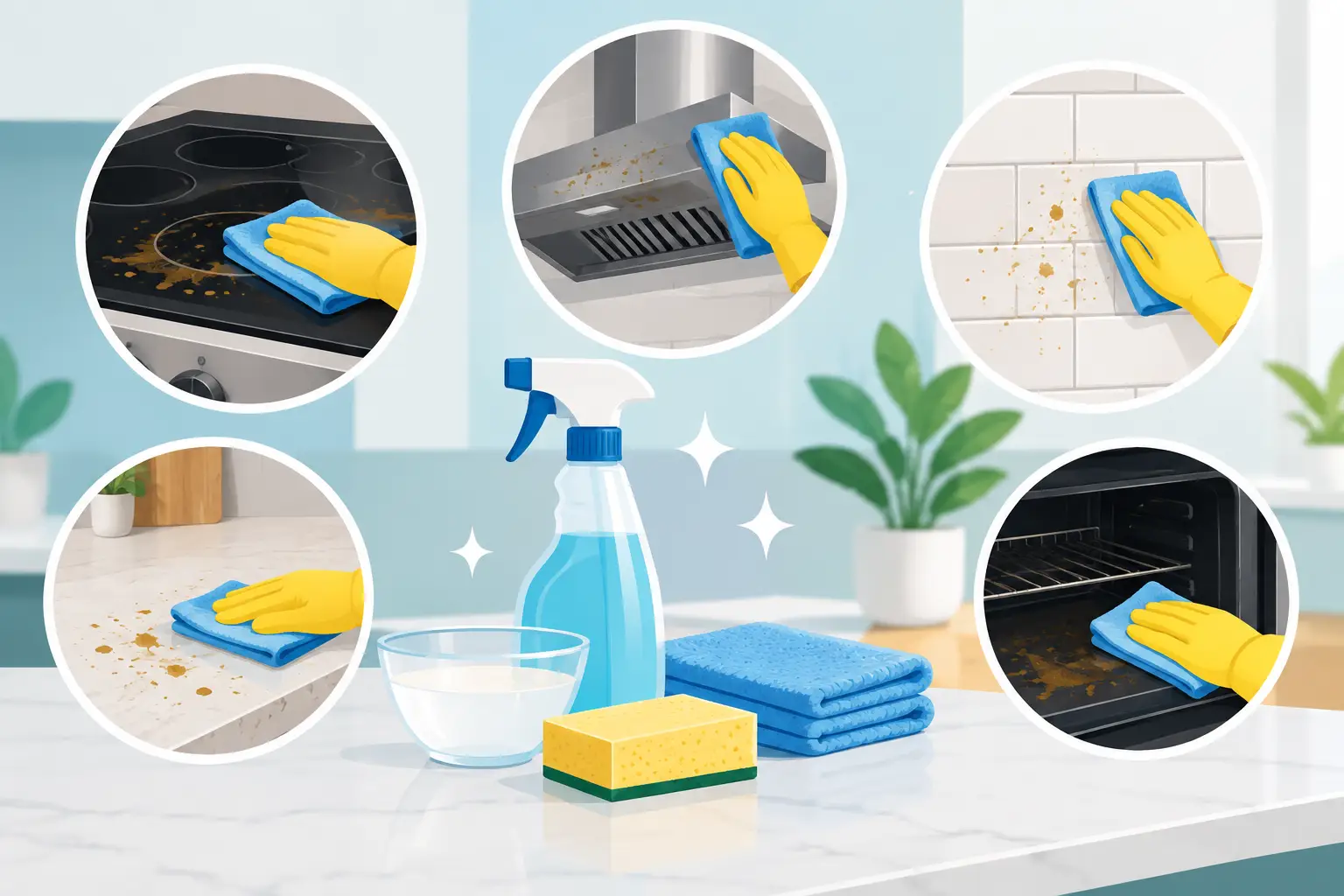
A greasy stovetop is obvious. The film on cabinet doors, backsplash grout, range hoods, and nearby walls is not. It builds slowly, catches dust, and turns into the sticky layer that makes an otherwise clean kitchen feel unfinished. Knowing how to remove cooking grease means treating fresh splatter and old buildup differently, then using enough contact time to let the cleaner do its job.
The goal is not to attack every surface with the strongest product under the sink. Kitchen finishes vary, and harsh cleaners can dull stainless steel, damage painted cabinets, strip wood finishes, or leave cloudy marks on glass. A disciplined process gets better results with less scrubbing.
Start With the Right Grease-Removal Method
Cooking grease is oil. Water alone will not lift it effectively because oil and water do not mix. You need a surfactant, such as dish soap or a dedicated degreaser, to break the grease apart so it can be wiped away.
For light, fresh residue, warm water and a few drops of grease-cutting dish soap are usually enough. For thicker buildup around burners, cabinet pulls, and the range hood, use a kitchen degreaser that is labeled safe for the material you are cleaning. Let it sit briefly before wiping. That dwell time is what loosens the film. Spraying and immediately wiping often just spreads grease around.
Before you start, turn off the stove and make sure all surfaces are cool. Never spray cleaner directly into gas burners, electrical controls, ventilation openings, or appliance seams. Apply the product to a microfiber cloth instead when working near those areas.
The supplies that work without overcomplicating the job
You do not need a cabinet full of specialty products. Keep a simple setup ready:
- Grease-cutting dish soap
- Warm water in a bowl or spray bottle
- Microfiber cloths
- A nonabrasive sponge
- A soft toothbrush or small detailing brush
- A kitchen degreaser appropriate for tougher buildup
Use clean microfiber cloths, not an old sponge loaded with residue. A dirty cleaning tool transfers grease back onto the surface and leaves streaks that look like missed spots.
How to Remove Cooking Grease From a Stovetop
The correct approach depends on whether you have a sealed gas cooktop, electric coil stove, smooth glass cooktop, or stainless range. The rule is consistent: remove loose debris first, soften grease second, and wipe in controlled passes.
For most sealed stovetops, wipe away crumbs with a dry cloth. Apply warm, soapy water to a microfiber cloth and lay it over greasy areas for several minutes. This softens splatter without flooding the appliance. Then wipe from the outside toward the center, rinsing or changing cloths as they become dirty.
For stubborn grease around burner caps and grates, remove parts only after they are completely cool. Soak them in hot, soapy water, then use a nonabrasive sponge or soft brush. Dry every piece fully before reinstalling it. Avoid soaking igniters or letting water enter burner ports.
Glass cooktops need more restraint. Use a cleaner approved for glass cooktops and a soft cloth. If burned-on grease remains, use a cooktop scraper at a shallow angle, following the manufacturer’s instructions. Skip steel wool, scouring powder, and abrasive pads. They can create fine scratches that trap future grease and make the surface harder to maintain.
Clean Greasy Cabinets Without Damaging the Finish
Cabinets near the stove collect airborne grease even when they do not look visibly dirty. Test any cleaner in a hidden spot first, especially on painted, stained, matte, or older wood cabinets.
For routine buildup, mix warm water with a small amount of dish soap. Dampen a microfiber cloth so it is moist, not dripping, and wipe one small section at a time. Follow immediately with a second cloth dampened with plain water to remove soap residue. Then dry the cabinet with a clean towel.
Do not saturate cabinet edges, seams, or hardware holes. Water can swell engineered wood, loosen veneer, and damage paint over time. A degreaser may be appropriate for heavy buildup, but only if its label confirms it is safe for your cabinet material. Strong alkaline products can discolor or soften certain finishes.
For grooves around handles and raised-panel details, use a soft toothbrush lightly dampened with soapy water. Work gently, then wipe and dry. This is slower than spraying the whole cabinet front, but it protects the finish and produces a more even result.
Tackle Range Hoods, Backsplashes, and Walls
The underside of a range hood is usually the greasiest surface in the kitchen. Start by removing the filter if your hood allows it. Many metal filters can soak in hot, soapy water and be brushed clean. Check the manufacturer’s guidance first, since filter construction and dishwasher safety vary.
Wipe the hood exterior with a degreaser-safe microfiber cloth, paying attention to seams, buttons, and the front edge. Never spray directly into the fan, light fixture, or control panel. A clean hood filter matters because it helps the ventilation system capture more grease before it lands on cabinets and walls.
For tile backsplashes, warm dish soap and water are usually sufficient. Work from top to bottom so dirty runoff does not streak onto cleaned areas. Grout may need a soft brush, but avoid aggressive abrasives that can wear down sealant.
Painted walls require the gentlest method. Use a barely damp microfiber cloth with diluted dish soap, test an inconspicuous area, and wipe without scrubbing hard. Flat or matte paint can burnish, meaning the cleaned area becomes shinier than the surrounding wall. If the grease has been there for years, repainting may be more practical than repeated cleaning attempts.
Do Not Mix Cleaners or Use Heat as a Shortcut
A common mistake is combining products in the hope of creating a stronger cleaner. Do not mix bleach with ammonia, vinegar, acids, or other household cleaners. Dangerous fumes can result. Use one product, rinse if needed, and follow its label directions.
Heat also needs judgment. A warm cloth helps dissolve grease, but using boiling water on glass, laminate, or cold appliance surfaces can cause damage. Likewise, cleaning a still-hot stovetop can bake cleaner residue onto the surface and create fumes. Wait until the area is cool enough to touch comfortably.
Vinegar has a place in cleaning, but it is not a universal grease solution. It can help with mineral residue and light film on some surfaces, yet it is acidic and may harm natural stone or certain finishes. Dish soap or a surface-safe degreaser is the more dependable choice for cooking grease.
A Reliable Routine Prevents Heavy Buildup
The easiest grease to remove is the grease you do not give time to harden. After cooking, wipe the stovetop once it has cooled and clean fresh splatters from the backsplash. Once a week, wipe cabinet fronts near the range, the microwave exterior, and the hood surface. Clean hood filters on a schedule that matches how often you cook - monthly for frequent frying is a reasonable starting point.
If cabinet doors feel tacky after cleaning, the problem may be leftover product rather than leftover grease. Wipe them again with a clean cloth lightly dampened with plain water, then dry them. This final rinse is what leaves a finish clean instead of sticky.
For a kitchen that has gone beyond routine maintenance, start with a full reset. At Best Maids Ever, that means working surface by surface, using material-appropriate products, and removing residue rather than masking it with fragrance. Once the buildup is gone, regular cleaning takes far less time.
A clean kitchen should not require a weekend of scraping and second-guessing. Use the mildest effective cleaner, give it time to work, dry surfaces thoroughly, and address grease before it becomes a hardened project.