
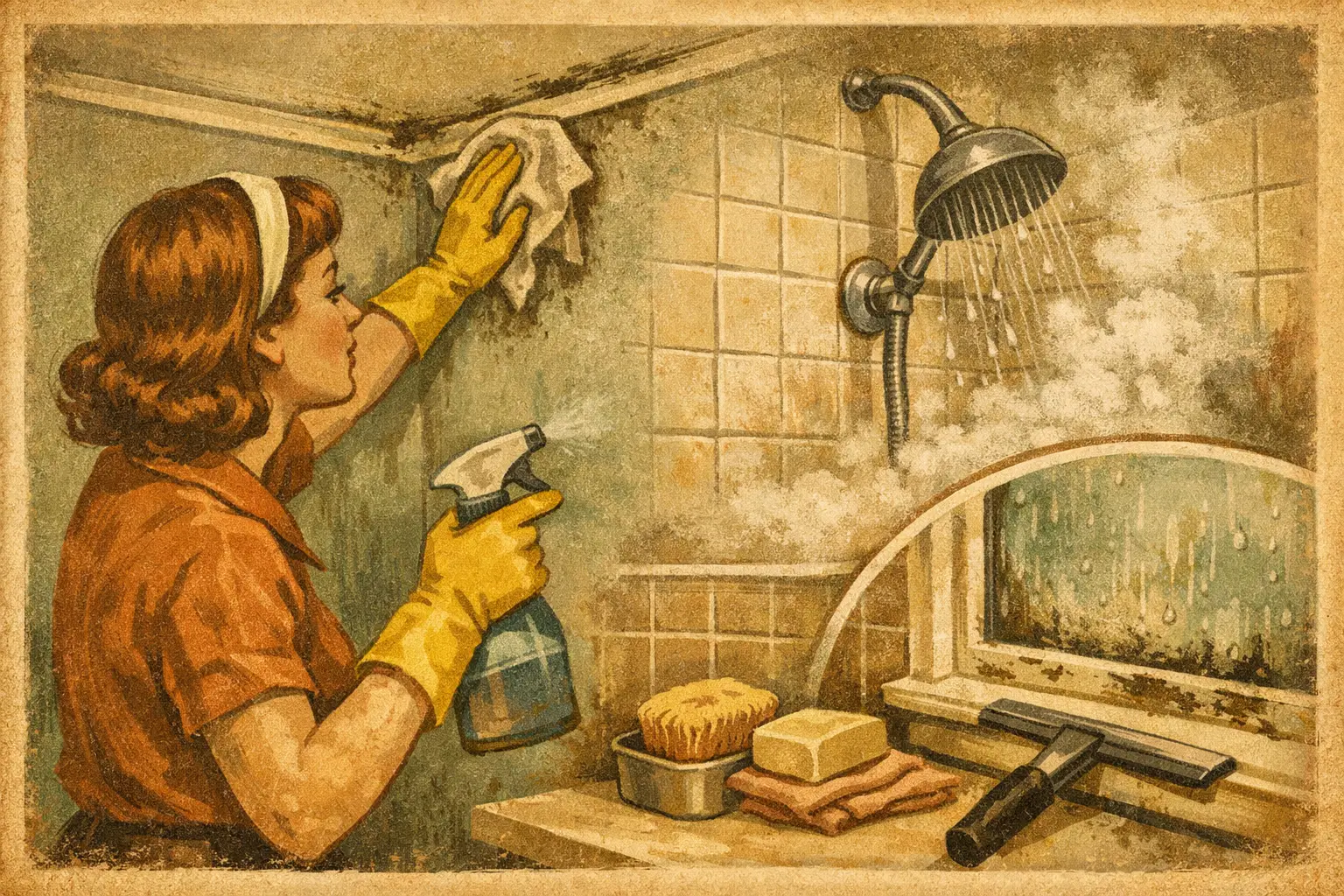
A bathroom can look clean and still be set up perfectly for mold: warm air, repeated moisture, limited airflow, and porous grout lines. Knowing how to prevent bathroom mold is less about buying a stronger cleaner and more about controlling moisture before it settles into caulk, ceilings, towels, and wall corners.
Mold prevention works best as a routine, not a rescue job. A few disciplined habits after each shower, combined with regular cleaning and prompt repairs, keep small moisture problems from becoming stained grout, peeling caulk, musty odors, or a larger remediation issue.
How to Prevent Bathroom Mold at the Source
Mold needs moisture, a surface to grow on, and enough time to establish itself. Bathrooms provide all three unless you interrupt the cycle. The most effective approach is simple: remove humid air, dry wet surfaces, and fix water sources that should not be there.
Use the exhaust fan correctly
An exhaust fan is not just for clearing a foggy mirror. It is your first line of defense against lingering humidity. Turn it on before you start the shower and leave it running for at least 20 to 30 minutes afterward. If your bathroom stays damp after that, run it longer.
The fan must vent outdoors, not into an attic, crawlspace, or another enclosed area. A fan that only makes noise but does not pull moisture out is not doing its job. Hold a square of toilet paper near the grille while the fan is running. If it does not pull toward the grille, clean the cover and consider having the fan inspected or upgraded.
A window can help, especially during mild weather, but it is not a reliable substitute for mechanical ventilation. In a New Jersey summer, outdoor air can already be humid. In winter, opening the window may be impractical. A properly sized, functioning exhaust fan gives you a consistent solution year-round.
Dry the shower after use
Water left on tile, glass, tub walls, and shower doors gives mold more time to take hold. Keep a squeegee in the shower and use it after the last shower of the day. It takes less than a minute and significantly reduces the water that would otherwise sit in grout lines and on glass.
Wipe down ledges, built-in niches, and the top edge of the shower door or curtain track as well. These are common trouble spots because water pools there unnoticed. Pull a shower curtain fully closed after use so it can dry instead of remaining folded in wet layers.
If several people use the same bathroom, the goal is not perfection after every shower. Focus on consistency: run the fan, spread the curtain, and make sure the room has time to dry between uses.
Keep humidity in a controlled range
A bathroom should not stay humid for hours. If the mirror, walls, or toilet tank are still covered in condensation long after bathing, the room needs better airflow. In most homes, indoor humidity between 30% and 50% is a sensible target.
A small humidity monitor can show whether the problem is limited to shower time or part of a whole-home moisture issue. If your bathroom is repeatedly damp despite using the fan, check for an undersized fan, a blocked duct, poor insulation, or a hidden leak. A portable dehumidifier can help in a persistently humid room, but it should not be used to ignore a ventilation or plumbing problem.
Remove Moisture Traps Around the Bathroom
Mold often starts in the places people clean least often. The visible shower walls may be spotless while damp laundry, wet bath mats, and cluttered counters quietly hold moisture in the room.
Hang towels so air can move around them. Thick towels piled on a hook can stay damp all day, particularly in a busy household. Wash them regularly and do not leave wet clothing on the floor or draped over the tub.
Bath mats deserve the same attention. Choose mats that dry quickly, hang them after use when possible, and wash them according to their care instructions. Check the floor underneath, especially if the mat has a rubber backing that holds moisture against tile or vinyl.
Keep shampoo bottles, razors, and decorative containers from permanently occupying wet shower ledges. Lift them when you clean and dry the surface underneath. A simple shower caddy makes this easier and gives water fewer hidden places to collect.
Clean Grout, Caulk, and Fixtures on a Schedule
Prevention does not require harsh chemicals every day. It requires regular cleaning that removes soap scum, body oils, and residue mold can feed on. A weekly bathroom cleaning is the baseline for most households. High-traffic bathrooms may need a quick midweek wipe-down as well.
Use a bathroom cleaner that is appropriate for your surfaces, then rinse and dry where needed. Pay close attention to grout, the caulk line where the tub meets the wall, shower door tracks, faucet bases, and around the toilet. Those areas hold moisture and buildup longer than open tile.
Do not mix cleaning products. Bleach combined with ammonia, acids, or some other household cleaners can create dangerous fumes. Bleach may lighten surface staining on nonporous materials, but it is not a universal answer for mold, particularly on porous grout, drywall, wood, or caulk. The right cleaner depends on the surface and the extent of the problem.
For light mildew spotting, clean promptly, let the area dry completely, and monitor it. If staining returns in the same place, treat it as a moisture investigation rather than a cleaning failure. Recurring mold usually means water is still getting in or humid air is still staying too long.
Do not ignore failing caulk
Cracked, separated, or missing caulk allows water behind the shower surround and tub. That hidden moisture can cause mold growth where routine cleaning cannot reach it. Inspect the caulk several times a year, especially at corners, along the tub edge, and around fixtures.
Replace damaged caulk instead of repeatedly scrubbing it. The same rule applies to crumbling grout. Repairs are less convenient than cleaning, but they are far less expensive than allowing water damage behind a wall or under a floor.
Check for Leaks and Condensation
Not every mold problem comes from showers. A slow leak beneath the sink, a sweating pipe, a loose toilet seal, or water around a window can create the same conditions. Check under the vanity periodically for dampness, staining, warped materials, or a musty smell.
Look at the ceiling and upper walls too. Peeling paint, yellow-brown marks, soft drywall, and repeated dark spotting can point to a roof leak, plumbing issue, or ventilation failure. If a bathroom shares a wall with a laundry room or sits below another bathroom, investigate any recurring moisture promptly.
Condensation on cold water pipes is common in humid conditions. Pipe insulation may reduce that moisture, but first confirm that there is no active leak. The goal is to identify the source, not cover up the symptom.
Know When Cleaning Is Not Enough
A small patch of surface mildew that cleans away and does not return is usually manageable with better drying and routine maintenance. Widespread growth, a persistent musty odor, soft or damaged drywall, or mold that repeatedly comes back calls for a more serious response.
Do not paint over mold-stained walls or caulk without addressing the moisture source. Paint may hide the evidence temporarily, but it will not stop growth behind the surface. If the affected area is large, involves water damage, or appears connected to a leak, contact a qualified remediation or repair professional.
For households that are short on time, scheduled cleaning adds useful accountability. A consistent service can keep soap residue, damp buildup, grout lines, and overlooked edges from becoming a bigger project. Best Maids Ever begins recurring service with a 1st Time Deep Clean, which helps reset neglected bathroom surfaces before a maintenance routine takes over.
A Simple Routine That Actually Holds Up
The best plan is one your household will follow. After bathing, run the fan, squeegee the shower when practical, spread out the curtain, and hang wet towels to dry. Once a week, clean the shower, toilet, sink, floors, and moisture-prone edges. Once a month, inspect caulk, grout, fan performance, and the space beneath the sink.
That rhythm prevents most bathroom mold without turning your weekend into a cleaning project. When a dark spot or musty smell appears, act early. A dry, well-ventilated bathroom is easier to maintain, healthier to use, and far less likely to surprise you with a costly repair.