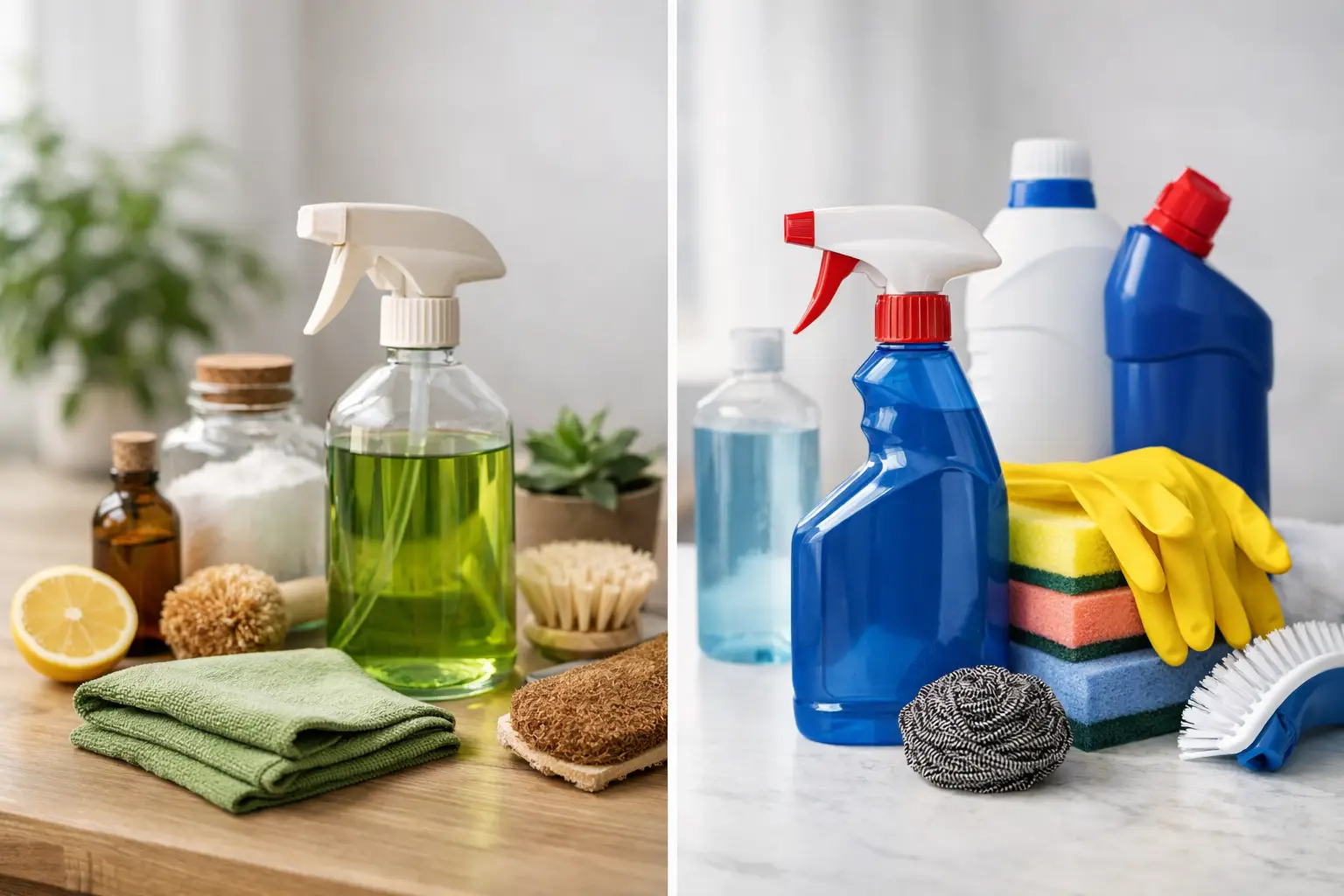
A kitchen can look spotless and still leave behind a sharp chemical smell, streaky floors, or residue on the counters where your family eats. That is the practical question behind green cleaning versus traditional cleaning: not which option sounds better on a label, but which one gives your home the level of clean you need without creating new concerns.
For busy New Jersey households, the right choice depends on more than personal preference. Children, pets, allergies, sensitive skin, the surfaces in your home, and the type of soil being removed all matter. A well-run cleaning service should have a clear process for each of them.
Green Cleaning Versus Traditional Cleaning: The Real Difference
Green cleaning generally uses products and methods selected to reduce harsh chemical exposure and environmental impact. These products may be plant-based, fragrance-free, biodegradable, or made with ingredients intended to be safer for indoor use. Green cleaning also emphasizes practical habits, such as using reusable microfiber cloths, applying only the amount of product needed, and avoiding unnecessarily harsh solutions.
Traditional cleaning typically relies on conventional commercial products. Some are highly effective against grease, soap scum, mineral buildup, and heavy grime. Others contain stronger fragrances, solvents, bleach, ammonia, or other ingredients that can be irritating when used improperly or in poorly ventilated spaces.
The difference is not as simple as “green works” and “traditional works better.” Product quality, dwell time, technique, and the condition of the home matter more than a label alone. A weak conventional cleaner will not outperform a well-matched green product. At the same time, an all-purpose eco-friendly spray may not be the right tool for every tough buildup.
That is why professional cleaning should be based on the job in front of us. A maintenance clean in a regularly serviced home is different from a first-time deep clean after months of accumulated kitchen grease, hard-water stains, and bathroom buildup.
What Green Cleaning Does Well
For routine home maintenance, green products can deliver excellent results. They are especially useful on counters, sealed hard floors, dusting surfaces, bathroom fixtures, and frequently touched areas that need regular attention without leaving a heavy scent behind.
Many clients prefer green cleaning because it helps keep their home comfortable after the crew leaves. Parents may not want strong odors lingering in bedrooms and play areas. Pet owners may want to reduce exposure to unnecessary residues. Households with asthma, migraines, eczema, or fragrance sensitivities often benefit from a more selective product approach.
Green cleaning can also be a smart fit for recurring service. When a home is professionally maintained weekly, bi-weekly, or monthly, dirt does not have as much time to harden into a difficult cleaning problem. Consistent upkeep reduces the need for aggressive products because the baseline condition of the home stays under control.
The process still matters. A safe product used with a dirty cloth can spread residue instead of removing it. Microfiber cloth rotation, clean mop heads, proper dilution, and clear separation between kitchen and bathroom tools are not optional details. They are part of a clean home.
Where Traditional Products May Have an Advantage
There are situations where conventional products can be more efficient or more appropriate. Heavy grease inside an oven, severe soap scum on shower glass, mineral deposits from hard water, and neglected grout may require stronger specialty solutions. Using an underpowered product on a major buildup can mean more scrubbing, more time, and a less consistent result.
Disinfection is another area where precision matters. Cleaning removes dirt and many germs from a surface. Disinfecting uses a product approved for killing specific pathogens, and it must remain wet on the surface for the required contact time. Not every green cleaner is a disinfectant, and not every disinfectant is necessary for every room or every appointment.
A professional should never imply that a pleasant-smelling spray disinfects simply because it says “natural” or “eco-friendly.” Nor should a cleaner use strong disinfectants throughout an entire home when ordinary cleaning is the actual need. The right solution is targeted use, based on the surface, the situation, and the product directions.
Traditional products also require careful handling. Bleach and ammonia should never be mixed. Strong products should be stored safely, used with proper ventilation, and kept away from materials they can damage. More chemical is not more clean.
“Green” on the Label Is Not a Cleaning Standard
The word “green” can be useful, but it is not a guarantee by itself. Some products marketed as natural still contain heavy fragrances or ingredients that may bother sensitive people. Others may be safer choices but simply not strong enough for a particular task.
Ask what the service actually means by eco-friendly cleaning. A clear answer should cover the types of products used, whether fragrance-free options are available, how specialty stains are handled, and when a stronger product might be recommended. Vague promises do not protect your home. A defined process does.
It is also worth distinguishing between low-odor and fragrance-free. Low-odor products may still contain fragrance. If a member of your household has allergies, asthma, migraines, or chemical sensitivities, be specific before service begins. Tell the cleaning team which rooms, surfaces, or products need extra attention.
Choosing the Right Approach for Your Home
The best choice often is not exclusively green or exclusively traditional. It is a controlled, practical approach that starts with the least aggressive product capable of doing the job and escalates only when the condition requires it.
For example, a well-maintained bathroom may only need an effective eco-friendly cleaner and proper agitation. A shower with months of mineral scale may need a specialty product during the initial deep clean, followed by gentler maintenance from that point forward. The goal is not to prove loyalty to one product category. The goal is to get the surface clean, protect the material, and keep the result manageable.
Consider your household priorities. If your primary concern is reducing fragrance and harsh residues, green cleaning may be the right default. If you are preparing a rental for move-out inspection, dealing with a neglected kitchen, or managing heavy commercial traffic, certain conventional specialty products may be justified. Clear communication prevents surprises.
Surface type should also guide the decision. Natural stone, unfinished wood, delicate finishes, and certain appliance surfaces can be damaged by acidic, abrasive, or overly strong cleaners. Even the most powerful product is a poor choice if it etches a countertop or dulls a floor finish.
Why the First Cleaning Sets the Standard
A recurring cleaning plan only works when the home begins at a known standard. That is why Best Maids Ever starts with a required 1st Time Deep Clean before moving a client into ongoing maintenance. It gives the cleaning team time to address the buildup that routine visits are not designed to chase.
During that initial reset, the product plan can be matched to the condition of each area. Interior appliance cleaning, detailed bathroom work, kitchen grease removal, and high-touch surfaces need more attention than they will once the home is on a consistent schedule. After the reset, weekly, bi-weekly, or monthly service becomes more efficient and more predictable.
Clients who choose eco-friendly cleaning should still expect a defined scope and real results. Eco-friendly should not mean rushed, watered down, or incomplete. It should mean that products and methods are selected deliberately, with your household’s needs and the condition of the home in mind.
A dependable cleaning service will also be direct about limitations. Permanent staining, damaged grout, etched glass, worn finishes, and years of neglect cannot always be reversed by any cleaner, green or conventional. Honest expectations are part of quality service.
The best cleaning plan is the one you can maintain without second-guessing what was used in your home. Choose a service that asks the right questions, explains its process clearly, and leaves you with a clean space that feels as good as it looks.