
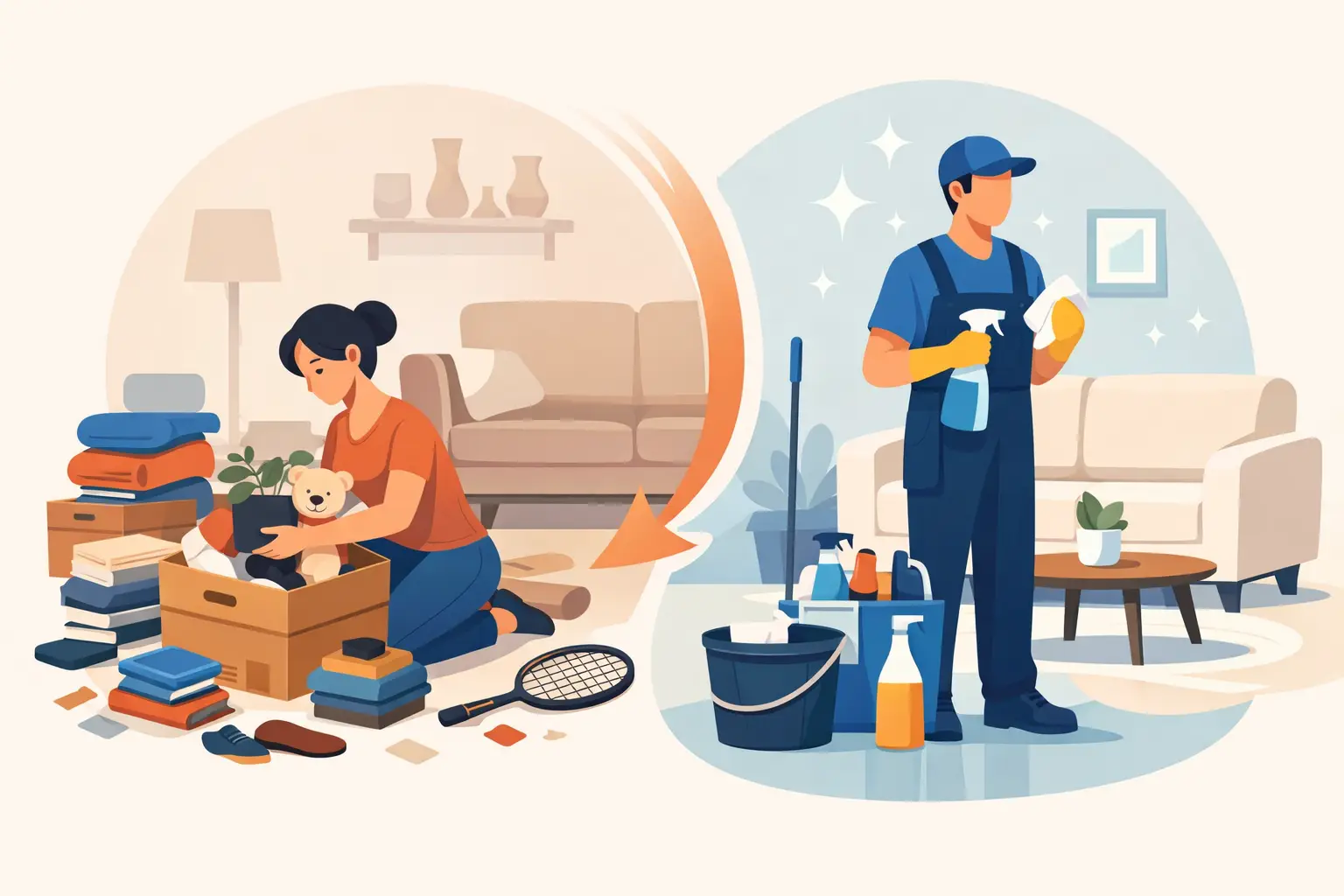
A professional cleaner can remove built-up soap scum, kitchen grease, dust, and grime. They cannot make fast, reliable decisions about every pile of mail, toy bin, clothing chair, or half-finished project in your home. That is why decluttering before professional cleaning matters - not because your home has to look perfect, but because clear surfaces and open floors let the cleaning team deliver the reset you booked.
For busy households, the goal is not an all-weekend organizing project. It is a practical handoff. Put away what belongs in the room, remove personal items that need your attention, and give the cleaners safe access to the areas included in your service. Then let the cleaning professionals handle the cleaning.
Why Decluttering Before Professional Cleaning Changes the Result
Cleaning and decluttering are related, but they are not the same service. Decluttering means deciding what to keep, toss, donate, file, or relocate. Cleaning means sanitizing, wiping, vacuuming, mopping, and detailing the surfaces that are accessible.
When counters, sinks, floors, and tabletops are covered, a cleaning team has two bad options: spend valuable appointment time moving items around or leave parts of those surfaces untouched to avoid misplacing anything. Neither produces the fully reset feeling most customers want from a first-time deep clean.
A reasonably picked-up home allows more time for the work that makes a visible difference: inside appliance cleaning, bathroom detailing, baseboards, floor edges, dust removal, and kitchen degreasing. It also supports consistency once you move into weekly, bi-weekly, or monthly maintenance. A home that can be cleaned efficiently is easier to keep clean.
This does not mean you need to clear every shelf or empty every cabinet. In fact, over-prepping can become another stressful task on an already full schedule. Focus on access, not perfection.
What to Put Away Before Your Cleaning Appointment
Start with the rooms being cleaned and make quick decisions. Put items in their usual homes whenever possible. If something does not have a home yet, place it in one clearly marked basket or bin rather than spreading it across multiple surfaces. You can sort it later without blocking the cleaning work now.
The highest-impact areas are usually kitchen counters, bathroom vanities, dining tables, coffee tables, bedroom floors, and the floor around beds and sofas. Clear these spaces enough for a cleaner to reach them safely and thoroughly.
The day before your appointment, handle these five categories:
- Clothing, shoes, bags, and laundry from floors, beds, and chairs.
- Paperwork, mail, school papers, and small electronics from counters and tables.
- Dishes, food containers, and personal kitchen items that do not belong in the sink or dishwasher.
- Bathroom products, cosmetics, medications, and valuables you prefer to put away yourself.
- Pet toys, children’s toys, cords, and loose items that can create a tripping hazard or block vacuuming.
This is not a request to hide normal life. A family home will look lived in, and that is expected. The point is to remove obstacles, protect your personal belongings, and make the scope of work clear.
Do Not Create a “Stuff Room” Without a Plan
It is tempting to sweep everything into one bedroom, office, or basement before a cleaning visit. That can work if the room is outside the service scope and the items are safely contained. It does not work if you expect that room to be cleaned, organized, or vacuumed thoroughly afterward.
If a room is too cluttered for access, say so before the appointment. A professional company can help set realistic expectations, adjust the scope, or discuss organization services when appropriate. Clear communication is better than hoping the issue disappears once the team arrives.
What You Do Not Need to Do
Do not pre-clean your home. You do not need to scrub the shower, vacuum the carpets, wipe the kitchen, or clean inside the oven before a professional cleaning. That duplicates work you are paying to have done.
You also do not need to reorganize every closet, pantry, drawer, or cabinet unless you want those areas included in an organization project. Deep cleaning is designed to address dirt and buildup. Organization requires decisions about ownership, storage, and routines. Those are separate jobs, even when they happen in the same home.
There are exceptions. If you want interior cabinets, a refrigerator, or another enclosed area cleaned, emptying it first may be necessary. This gives the cleaner access and protects food, medications, and personal items. Confirm the service details ahead of time rather than making assumptions about what is included.
Prepare for a First-Time Deep Clean Differently
A first-time deep clean is not just a larger version of a routine visit. It is the appointment that establishes the baseline for every maintenance cleaning that follows. It takes more time because the team is addressing accumulated buildup and cleaning areas that may not receive regular attention.
For that reason, access matters even more. Before the team arrives, make sure they can reach the bathrooms, kitchen, bedrooms, floors, and common areas scheduled for service. Secure pets if they may be anxious or protective around new people. Share entry instructions, alarm information, parking details, and any room-specific priorities in advance.
If there are fragile items, heirlooms, or surfaces requiring special care, point them out. A trained, insured, background-checked cleaning team should have a clear process, but no cleaner can protect an item they cannot identify or safely access.
For households in North and Central New Jersey, this preparation is especially helpful during high-demand periods such as move-ins, holiday hosting, and busy school-year schedules. A few focused minutes before the appointment can prevent a rushed, disappointing result later.
Set Priorities Instead of Expecting Everything at Once
Every home has one or two areas that create the biggest daily frustration. It may be a shower with stubborn buildup, a kitchen that never feels fully clean, pet hair along the baseboards, or floors that need serious attention. Identify those priorities before the appointment.
A good cleaning team follows a defined scope, but sharing your priorities helps them understand what matters most to you. Be specific. “Please pay extra attention to the primary bathroom floor and the cooktop” is actionable. “Make the house spotless” is understandable, but it gives less direction when time and conditions vary.
This is also where expectations need to stay realistic. Heavy buildup, mineral deposits, permanent staining, damaged grout, and worn finishes do not always disappear in one visit. Professional cleaning can dramatically improve a space, but it cannot repair a surface that is already etched, rusted, or physically damaged. Clear communication protects both the customer and the cleaning team from surprises.
How to Keep Clutter From Blocking Future Cleanings
Once the home has been reset, maintenance gets easier when you build a simple pre-clean routine. The best routine is not elaborate. It is one your household can repeat before every visit without debate.
Try a 10-minute reset the evening before. Put away dishes, collect laundry, clear the bathroom counter, pick up floor items, and place loose papers in one tray. Assign family members a zone if needed. The system works because it is short enough to happen consistently.
If clutter keeps returning to the same areas, the problem may be storage rather than effort. A landing spot for bags, a basket for toys, a paper tray near the entry, or a hamper where clothes actually come off can reduce daily buildup. Small changes often make recurring cleaning more effective than a major organizing project you never have time to finish.
A Clean Home Starts With a Clear Handoff
You should not have to spend hours preparing for professional cleaning. But you should make room for the professionals to do what they do best. Put away personal clutter, clear the surfaces and floors that need attention, communicate special requests, and leave the scrubbing, detailing, and floor care to the team.
The result is not just a better first appointment. It is a home that is easier to maintain, easier to enjoy, and far more likely to stay at the standard you expected when you booked.