A kitchen can smell like lemon and still be covered in residue. A bottle can say “natural” and still contain ingredients that irritate sensitive skin or leave a heavy fragrance behind. The complete guide to eco friendly cleaning starts with that distinction: effective cleaning is not about buying the greenest-looking bottle. It is about using the right methods and products to remove soil, grease, germs, and allergens without adding unnecessary chemicals to your home.
For busy New Jersey households, the goal is practical. You need a home that is clean enough for daily life, safe for kids and pets, and simple to maintain between professional visits. Eco-friendly cleaning can do that well when it is handled with the same discipline as any other cleaning system.
What Eco-Friendly Cleaning Actually Means
Eco-friendly cleaning means choosing products and practices that reduce unnecessary exposure to harsh chemicals, excess packaging, and waste while still delivering a real clean. It does not mean every product must be homemade. It does not mean fragrance-free products are always better, or that plant-based ingredients are automatically harmless.
A responsible approach considers the full job. You want products with clear ingredient information, reasonable packaging, and directions that explain how long a surface must stay wet to sanitize or disinfect when that level of cleaning is needed. You also want reusable tools that work efficiently, water use that makes sense, and products matched to the surface in front of you.
The most sustainable cleaner is often the one that prevents damage. Replacing etched stone, ruined hardwood, or discolored grout creates far more waste and expense than using the correct product from the beginning.
Complete Guide to Eco Friendly Cleaning: Start With the Right Tools
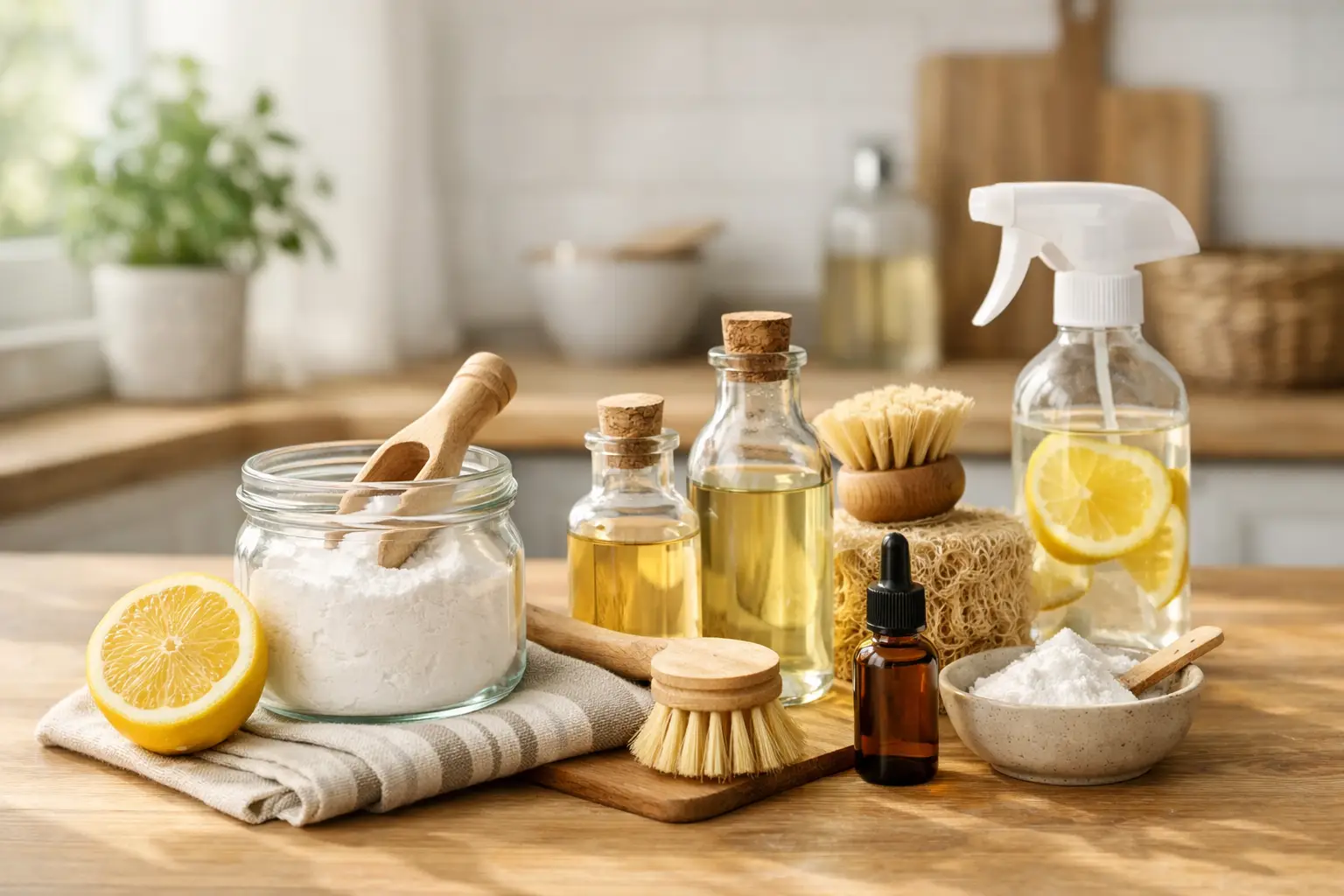
You do not need a cabinet full of specialty sprays. A focused set of tools handles most residential cleaning without creating clutter or waste. High-quality microfiber cloths, a washable mop pad, a vacuum with good filtration, a scrub brush, and a squeegee do much of the work before a cleaning solution is even necessary.
Microfiber is especially useful because its fine fibers capture dust and grime with less product. Use separate, clearly marked cloths for kitchens, bathrooms, and general dusting. Wash them without fabric softener, which coats the fibers and reduces their ability to pick up soil. Replace cloths once they no longer perform well rather than pushing worn materials past their useful life.
For products, look for concentrated formulas or refill options when available. Concentrates can reduce plastic packaging and storage space, but only if they are diluted correctly. More solution does not create a better clean. It can leave sticky residue that attracts dust and makes floors look dull.
A basic setup should cover all-purpose cleaning, dishwashing, bathroom cleaning, glass, and laundry. Add specialty products only for surfaces that require them, such as natural stone, stainless steel, hardwood, or heavy mineral buildup.
Read Labels Instead of Trusting Front-Label Claims
Terms such as “green,” “clean,” and “natural” are marketing language unless the label also gives you meaningful information. Read the back of the bottle. Look for transparent ingredient disclosure, clear directions, surface limitations, and safety instructions.
Fragrance deserves special attention. A fresh scent can make a room feel clean, but fragrance is not proof that a product works. For households with asthma, migraines, allergies, young children, or pets, low-fragrance or fragrance-free options may be a better fit. That choice depends on the people in the home and their sensitivities, not on a blanket rule.
Be cautious with essential-oil-heavy products, too. “Natural” does not equal risk-free. Concentrated oils can trigger reactions, and certain oils can be unsafe around pets. Store every cleaner securely, keep it in its original labeled container, and follow the manufacturer’s directions.
Match the Product to the Job
Cleaning, sanitizing, and disinfecting are different tasks. Cleaning removes visible dirt, grease, and many germs from a surface. Sanitizing reduces germs to a level considered safer by public-health standards. Disinfecting is designed to kill specific germs and generally requires a product to remain wet on the surface for a stated contact time.
For routine cleaning of counters, tables, sealed floors, and frequently touched areas, a gentle all-purpose cleaner and a clean cloth are usually enough. In a home where someone is sick, after handling raw meat, or when cleaning a bathroom with active illness concerns, a disinfectant may be appropriate. Choose one that is registered for its intended use and follow the label exactly.
Do not rely on vinegar as a universal cleaner. It can be useful for certain mineral deposits and glass, but its acidity can damage marble, granite, travertine, unsealed grout, and some wood finishes. Likewise, baking soda is mildly abrasive and can scratch delicate finishes when used aggressively. Simple products still need correct technique.
Never mix cleaning products. Bleach mixed with ammonia, acids, or certain other products can create dangerous fumes. Even if you use a lower-toxicity routine most of the time, this rule is non-negotiable.
Use a Room-by-Room Cleaning System
Eco-friendly cleaning works better when you stop re-cleaning the same messes. Work from high to low and dry to wet. Dust first, then clean counters and fixtures, then finish with floors. This avoids spreading debris back onto surfaces you already handled.
In the kitchen, remove crumbs and food debris before spraying anything. Clean countertops according to their material, wipe cabinet pulls and appliance handles, and wash the sink last. A clean sink matters because it receives food residue, dirty dishes, and sponges throughout the day. Let reusable sponges dry fully between uses, or switch to washable cloths that can be laundered frequently.
In bathrooms, give your cleaner time to work on soap scum and mineral buildup rather than scrubbing immediately. This reduces the need for harsh abrasives. Use a squeegee on shower glass after use and run the bathroom fan long enough to remove moisture. Preventing mildew is easier, cheaper, and more environmentally responsible than repeatedly treating it.
For floors, vacuum or sweep before mopping. Grit acts like sandpaper underfoot, especially on hardwood and luxury vinyl. Use only enough moisture for the flooring type. Saturating wood floors or forcing water into seams can cause lasting damage.
Reduce Waste Without Lowering Your Standard
The easiest waste reduction is using less disposable material for routine work. Replace paper towels for most spills with washable cloths, reserve disposable towels for raw-meat cleanup or truly unsanitary messes, and choose durable refillable spray bottles only when you can label them clearly.
Laundry habits matter, too. Wash cleaning cloths in full loads when possible, use the recommended detergent amount, and avoid overusing dryer sheets or softeners. Air-drying cloths is an option, but proper laundering is more important than the drying method. A cloth that smells sour or has been used in a bathroom should not return to kitchen duty without being washed.
There is a trade-off here. Reusable tools are not automatically cleaner. They save waste only when they are maintained, separated by task, and laundered consistently. For certain contamination events, disposable materials may be the safer choice.
When Professional Eco-Friendly Cleaning Makes Sense
A professional service should not treat eco-friendly cleaning as a vague add-on. The process should define the products used, the surfaces they are appropriate for, and the level of cleaning being performed. That clarity matters when a household has allergies, pets, new babies, sensitive finishes, or specific fragrance preferences.
At Best Maids Ever, a first-time deep clean is designed to reset the home before recurring service begins. That structure helps prevent the common problem of trying to maintain a home that never received a thorough baseline clean. Once buildup is removed from kitchens, bathrooms, floors, and high-touch areas, ongoing eco-conscious maintenance becomes faster and more consistent.
Before booking any service, be clear about your priorities. Tell the cleaning team about stone countertops, specialty flooring, indoor pets, fragrance sensitivities, or areas that need disinfecting rather than routine cleaning. A dependable provider will set expectations upfront instead of making assumptions after they arrive.
Keep the System Easy Enough to Repeat
The best cleaning routine is not the most complicated one. It is the one your household can follow every week. Keep daily effort limited to wiping food spills, managing dishes, drying wet bathroom surfaces, and putting clutter away. Then reserve deeper work for a scheduled weekly, biweekly, or monthly routine based on how the home is used.
Pay attention to results, not labels alone. If a product leaves residue, triggers headaches, damages a finish, or requires excessive scrubbing, it is not the right fit. If a simpler product and a better tool leave the surface genuinely clean, that is progress worth keeping.
A cleaner home does not require a harsher home. Choose carefully, use products correctly, and build a routine that protects the people, surfaces, and time that matter most.