
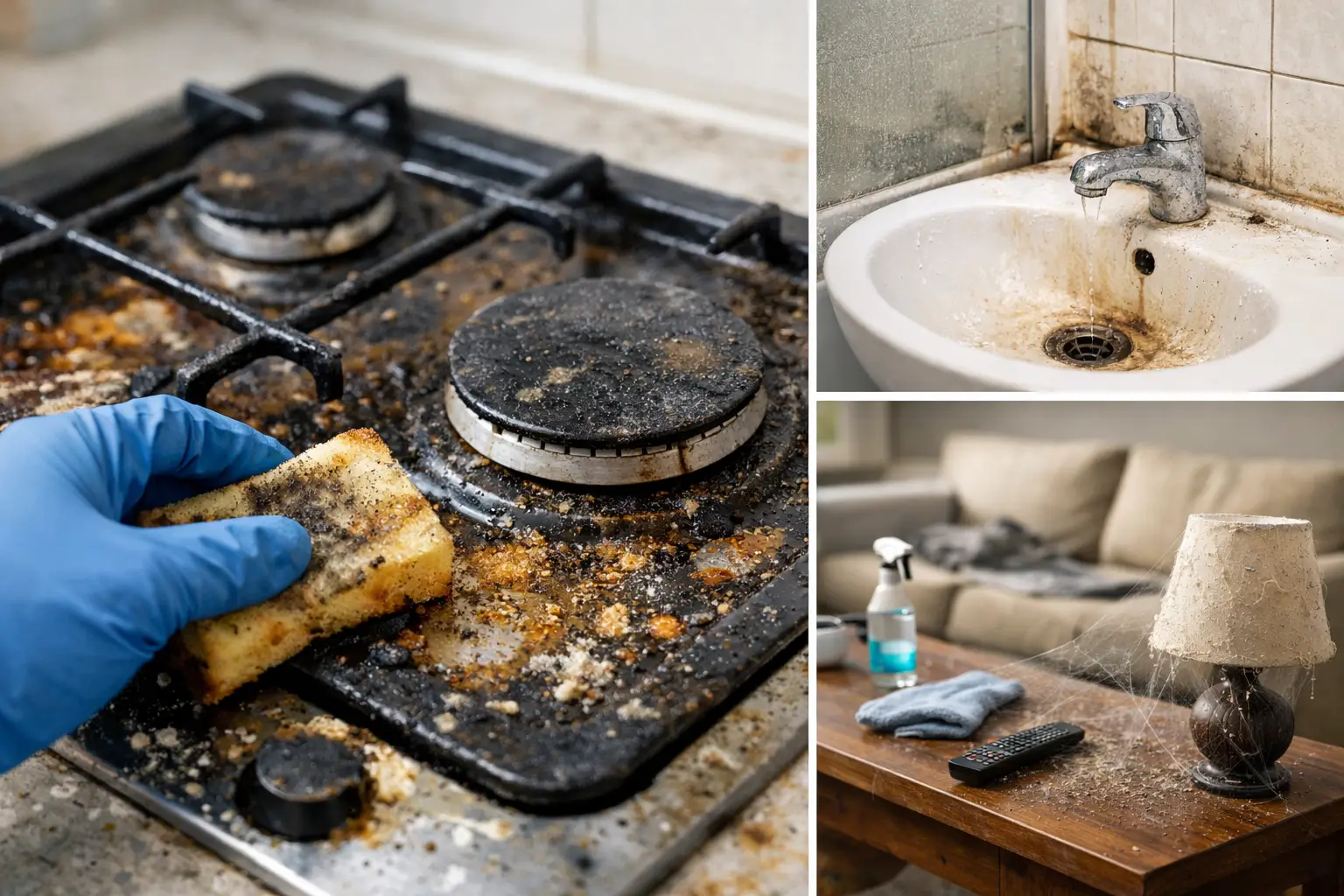
A home can look acceptable at a glance and still be overdue for a serious reset. The best signs you need deep cleaning usually show up in the places daily tidying does not reach: behind appliances, inside cabinets, along baseboards, and in bathrooms that never quite feel fresh.
A deep clean is not simply a longer version of regular cleaning. It is the work that removes built-up grease, soap residue, dust, pet hair, and grime so ongoing maintenance can actually keep up. If any of the signs below sound familiar, routine cleaning may no longer be enough.
10 Best Signs You Need Deep Cleaning Now
1. Your home looks clean, but it does not feel clean
You can vacuum, wipe the counters, and make the beds, yet the room still feels dull or slightly grimy. That often means the buildup is sitting on overlooked surfaces: doors, trim, light switches, ceiling fans, blinds, and the edges of flooring.
This is a common point of frustration for busy households. The visible tasks get done, but the home never reaches that fully refreshed feeling. A proper deep clean addresses the detail work that changes how a room feels, not just how it photographs.
2. Bathroom surfaces have persistent film or odors
Soap scum on shower doors, mineral deposits around faucets, residue in tile grout, and odors near drains are clear signs that a bathroom needs more than a quick wipe-down. Bathrooms collect moisture every day, and moisture turns small cleaning gaps into stubborn buildup.
The trade-off is simple: light maintenance can control a clean bathroom, but it cannot always remove months of residue. A deep cleaning resets tubs, showers, toilets, sinks, fixtures, and the surrounding surfaces so regular service has a clean starting point.
3. Your kitchen has grease where you do not normally look
Check cabinet fronts near the stove, the backsplash, the top of the refrigerator, and the area around your range hood. If those surfaces feel sticky or look darker than the rest of the kitchen, grease has been accumulating over time.
Kitchens are especially easy to underestimate because counters may be cleaned daily. But cooking oils travel. They settle on cabinets, appliances, walls, and floors, creating a layer that attracts more dust and dirt. Interior appliance cleaning is also a major reset point, particularly when the refrigerator, oven, or microwave has been ignored for a while.
4. Dust returns immediately after you clean
When dust seems to reappear the day after you wipe, the issue may not be your effort. It may be that dust is sitting in the places that feed it back into the room, including baseboards, vents, blinds, fan blades, upholstery edges, and under furniture.
A deep clean will not stop a home from producing dust. Pets, open windows, heating systems, and daily activity all contribute. It does remove the existing layers so you are maintaining a cleaner baseline instead of chasing the same dust week after week.
5. Floors are clean in the middle but dirty at the edges
The center of a floor gets attention. Corners, edges, under furniture, and the space along baseboards often do not. Over time, those areas collect pet hair, crumbs, dust, and the darker residue that makes a room look neglected even after it has been vacuumed.
This is particularly noticeable in entryways, kitchens, bathrooms, and homes with children or pets. A deep cleaning focuses on the full floor perimeter and hard-to-reach areas, while recurring cleaning helps prevent that buildup from returning.
6. You are avoiding opening cabinets, drawers, or appliances
If you hesitate before opening the refrigerator, microwave, oven, pantry, or under-sink cabinet, that is a practical sign your home needs a reset. These spaces are easy to postpone because they are not always visible to visitors, but they affect how functional your home feels every day.
Deep cleaning is most valuable when it removes that mental friction. A clean refrigerator makes meal planning easier. A refreshed oven makes cooking less unpleasant. Organized, wiped-down cabinets make it faster to find what you need. The goal is not perfection for its own sake. It is a home that is easier to use.
7. You have moved, hosted, renovated, or gone through a busy season
Life changes create cleaning backlog fast. A move-in, move-out, new baby, holiday hosting, home project, illness, or demanding work stretch can push detailed cleaning far down the list. That is normal. It also means the home may need more than a standard appointment to get back on track.
A move-related cleaning has a different purpose than ongoing housekeeping. Empty spaces reveal dust, residue, and debris that furniture usually hides. After renovations, fine dust can settle throughout the home. After a heavy hosting season, kitchens and bathrooms often need concentrated attention. In each case, starting with a deep clean is more efficient than trying to catch up through small weekly tasks.
8. Allergies, pet hair, or stale air are bothering your household
Cleaning cannot solve every indoor-air issue, and a professional cleaner is not a replacement for HVAC service or mold remediation. Still, accumulated dust, pet hair, and dander on surfaces can make a home feel less comfortable, especially for people with allergies.
Pay attention to the pattern. If sneezing, visible pet hair, or a stale smell improves right after cleaning but quickly returns, more detailed surface cleaning may be needed. A deep clean can reduce the buildup on reachable household surfaces, while regular visits help keep it manageable.
9. Your regular cleaning routine keeps getting skipped
A skipped cleaning week is not a failure. It is usually a sign that your household schedule is full. The problem begins when skipped weeks become skipped months and the home needs more time than you can realistically give it on a Saturday.
This is where a structured service plan earns its value. A first-time deep clean handles the backlog. Weekly, biweekly, or monthly maintenance then protects the result based on how your household actually lives. Families with children, pets, frequent cooking, or high foot traffic often need more frequent care than a one- or two-person household that travels often.
10. Guests are coming, and you are cleaning around the problem
Everyone has done it: close a door, move a pile, wipe only the visible counter space, and hope no one looks too closely. That may work for one evening, but it does not solve the underlying buildup.
If preparing for guests feels stressful because the house needs more than a fast pickup, schedule a deep clean before the next event rather than after it. You will start with bathrooms, kitchens, floors, and touchpoints that feel properly clean, not temporarily hidden.
What a Professional Deep Cleaning Should Cover
The scope should be clear before anyone arrives. A reliable deep clean is detailed, but it should not be vague. You should know what rooms and surfaces are included, whether interior appliances are covered, what add-ons are available, and how concerns will be handled if the work does not meet expectations.
At Best Maids Ever, the first-time deep clean is designed as a reset before recurring service begins. That approach is deliberate. Maintenance cleaning works best after the home has been brought to a consistent standard, rather than asking a standard visit to solve months of buildup in one appointment.
A complete reset commonly includes detailed kitchen and bathroom cleaning, dusting of accessible surfaces and fixtures, baseboards, floors, doors, high-touch areas, and interior appliance cleaning. Carpet cleaning, organization work, and special requests may require separate planning. Clear scope protects both the customer and the cleaning team from surprise expectations.
Deep Clean First, Then Make Cleanliness Easy
Once the home is reset, do not wait until it reaches the same point again. The right maintenance schedule depends on your household, but consistency is what keeps deep-clean results visible. Weekly service is often best for active homes. Biweekly service suits many working households. Monthly service can work for lower-traffic homes that stay relatively orderly between visits.
The useful question is not whether you can clean your own home. Most people can. The question is whether detailed cleaning is the best use of your limited time, and whether you want to keep restarting from scratch.
If your home is showing several of these signs, treat it as a scheduling decision, not a personal failing. Start with a thorough reset, choose a realistic maintenance rhythm, and let clean become the standard instead of another unfinished weekend task.