
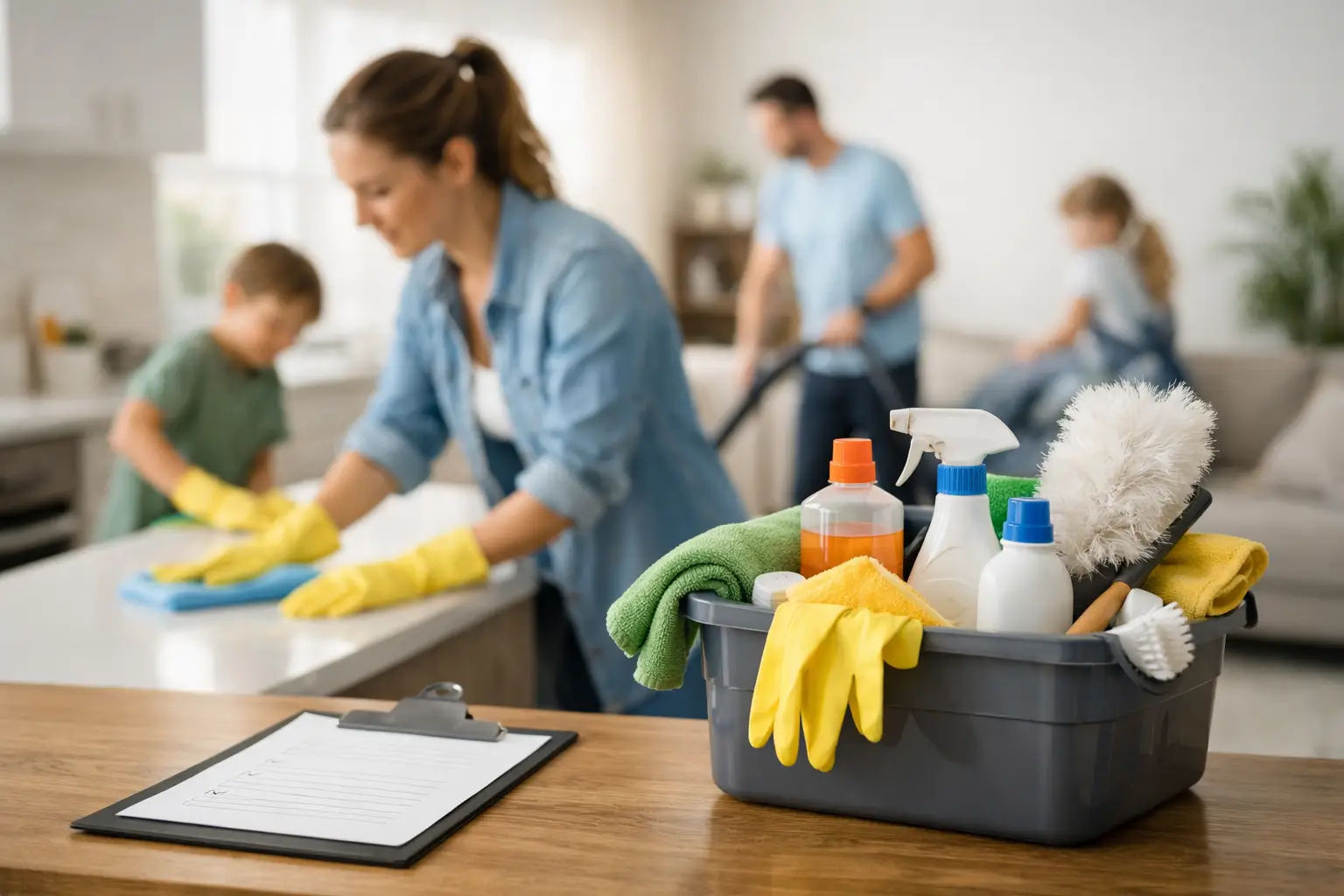
A family home does not get messy because anyone is doing something wrong. It gets messy because people live in it. Breakfast happens fast, shoes collect by the door, laundry multiplies, and one skipped bathroom wipe can become a Saturday project. The best home cleaning schedule for families is not the most ambitious one. It is the one your household can repeat without sacrificing every weekend.
A reliable schedule separates quick maintenance from deeper work. It also gives every task a clear frequency, so no one is guessing whether the baseboards, refrigerator, or shower actually need attention. Here is how to build a routine that keeps your home clean, functional, and ready for real life.
Start With a Clean Baseline
A schedule only works when you begin with a reasonably clean home. Trying to maintain a house that already has built-up soap scum, dusty vents, crowded closets, and a neglected oven is frustrating. Daily upkeep cannot fix problems that require focused deep cleaning.
Start by resetting the areas your family uses most: kitchens, bathrooms, bedrooms, floors, and main living spaces. Clear visible clutter, clean the interior of appliances, remove buildup from sinks and showers, and get floors properly vacuumed and mopped. Once that baseline is established, recurring cleaning becomes faster because you are maintaining clean surfaces rather than fighting layers of grime.
For busy households, a professional first-time deep clean is often the practical choice. It gives the home a true reset before weekly, biweekly, or monthly maintenance begins. The right service should clearly explain what is included, send insured and background-checked staff, and stand behind the work if something is missed.
The Daily Routine: Keep Small Problems Small
Daily cleaning should take 15 to 25 minutes total, not an entire evening. The goal is to prevent the messes that make a home feel out of control: food residue, laundry piles, overflowing trash, and clutter on horizontal surfaces.
Put the routine at a predictable point in the day. For many families, that means a quick kitchen reset after dinner and a 10-minute pickup before bedtime. Assign tasks by ability, not by perfection. Young children can return toys to bins. Older children can clear dishes, fold towels, or take out trash. Adults can handle wiping counters, loading the dishwasher, and resetting shared areas.
Your daily non-negotiables should include:
- Load or unload the dishwasher and wipe kitchen counters after meals.
- Wipe bathroom sinks and faucets after the morning or evening routine.
- Do a quick floor sweep in the kitchen and entryway when crumbs or debris are visible.
- Put away loose items in living areas, bedrooms, and the mudroom.
- Take out full trash and recycling before odors or overflow become a problem.
This is not about making every room look staged. A clean family home can still have backpacks by the door and a board game on the coffee table. The standard is simple: surfaces are usable, pathways are clear, and food, trash, and spills are handled promptly.
The Weekly Cleaning Schedule for Families
Weekly cleaning handles the tasks that affect hygiene and comfort but do not need daily attention. You can complete everything in one block or divide it across several days. Families with packed schedules usually do better by assigning one focus area per day rather than protecting a large chunk of weekend time.
Kitchen and Dining Areas
Clean the stovetop, microwave exterior, cabinet fronts, sink, and table. Sanitize the high-touch points that see constant use, including refrigerator handles, light switches, and chair backs. Vacuum or sweep thoroughly, then mop the floor.
Check the refrigerator before grocery shopping. Toss expired food, wipe any drips, and make room for the next week. A five-minute check prevents the refrigerator from becoming a monthly cleanup project.
Bathrooms
Scrub toilets, sinks, countertops, tubs, and showers. Replace towels, empty bathroom trash, and mop floors. If your shower develops mineral buildup quickly, especially in homes with hard water, wipe down glass and fixtures more often than once a week.
Keep basic supplies in each bathroom. When the cleaner, microfiber cloth, and toilet brush are within reach, the job gets done. When supplies are stored in a distant closet, small tasks tend to wait.
Bedrooms and Living Spaces
Change sheets weekly, dust visible surfaces, vacuum rugs and upholstery as needed, and vacuum or mop floors. Focus on what actually collects dust in your home: ceiling fans, nightstands, television stands, window ledges, and under dining chairs.
Do not force a full-room clean if a room has barely been used. A guest room may only need a quick dusting and vacuum every few weeks. A family room with pets, snacks, and daily traffic may need attention twice a week. The schedule should follow use, not a rigid rule.
Laundry and Entryways
Finish at least one full load from wash to fold to put-away. Leaving clean laundry in baskets creates visual clutter and makes it harder to find what your family needs. In the entryway, shake mats, put shoes in their assigned place, and wipe down the door area if rain, salt, or mud has been tracked inside.
For New Jersey families, entryway maintenance matters more in winter and during wet spring weeks. Salt residue, slush, and damp shoes can damage floors and spread dirt through the house quickly. Put washable mats at exterior doors and treat them as part of the weekly floor routine.
Monthly Tasks That Protect Your Home
Monthly cleaning is where the details live. These tasks do not need constant attention, but skipping them for months creates buildup and makes the next deep clean harder.
Set aside time each month for the following:
- Clean the interior of the microwave, wipe refrigerator shelves, and check the dishwasher filter.
- Dust blinds, ceiling fans, baseboards, vents, and door frames.
- Vacuum under sofa cushions and move lightweight furniture to clean beneath it.
- Wash shower curtains or bath mats, clean trash cans, and wipe cabinet interiors where spills collect.
- Review one storage zone, such as a pantry shelf, linen closet, toy bin, or coat closet.
Avoid trying to organize every closet in a single month. Choose one contained area and finish it completely. That approach creates visible progress without turning home organization into another unfinished project.
Plan Seasonal Deep Cleaning Before It Becomes Urgent
Some jobs belong on a quarterly or seasonal schedule: cleaning inside the oven, washing windows, vacuuming mattresses, deep-cleaning carpets, wiping inside cabinets, and moving heavier furniture. These are the jobs most likely to be postponed until guests are coming or a move is scheduled.
A seasonal deep clean is also a useful time to inspect the home. Look for mildew around caulking, grease buildup near the range, dust around returns, and stains that need targeted treatment. Cleaning does not replace maintenance, but it helps you catch small issues before they become expensive ones.
If your family has pets, allergies, toddlers, or frequent visitors, your deeper schedule may need to be more frequent. Carpet cleaning, upholstery vacuuming, and detailed bathroom work are not optional extras in every household. They depend on how the home is used.
Choose the Right Recurring Cleaning Frequency
Weekly service works best for busy families with children, pets, frequent cooking, or high foot traffic. It keeps bathrooms, kitchens, and floors consistently under control and reduces the daily workload at home.
Biweekly service is a strong fit for households that can maintain the daily reset but want dependable help with the heavier weekly work. Monthly service can work for smaller households or people who travel often, but it requires more effort between visits. The longer the gap, the more likely dust, grime, and clutter will build up.
At Best Maids Ever, the process begins with a first-time deep clean so recurring visits are maintaining a real standard, not chasing old buildup. That structure is more efficient, more predictable, and easier for families to sustain.
Make the Schedule Easier to Keep
A cleaning schedule fails when it depends on one person remembering everything. Put recurring tasks on a shared calendar, keep supplies where they are used, and give each family member a specific responsibility. Clear ownership works better than vague requests to “help clean.”
Also set a realistic standard for busy weeks. If school events, work deadlines, or illness take over, protect the basics: dishes, laundry, trash, bathrooms, and floors. The deeper tasks can wait a few days. A schedule should support your family, not become another source of pressure.
The best result is not a home that looks untouched. It is a home that stays comfortable, healthy, and manageable because everyone knows what gets done next - and because the heavy work never has time to pile up.