
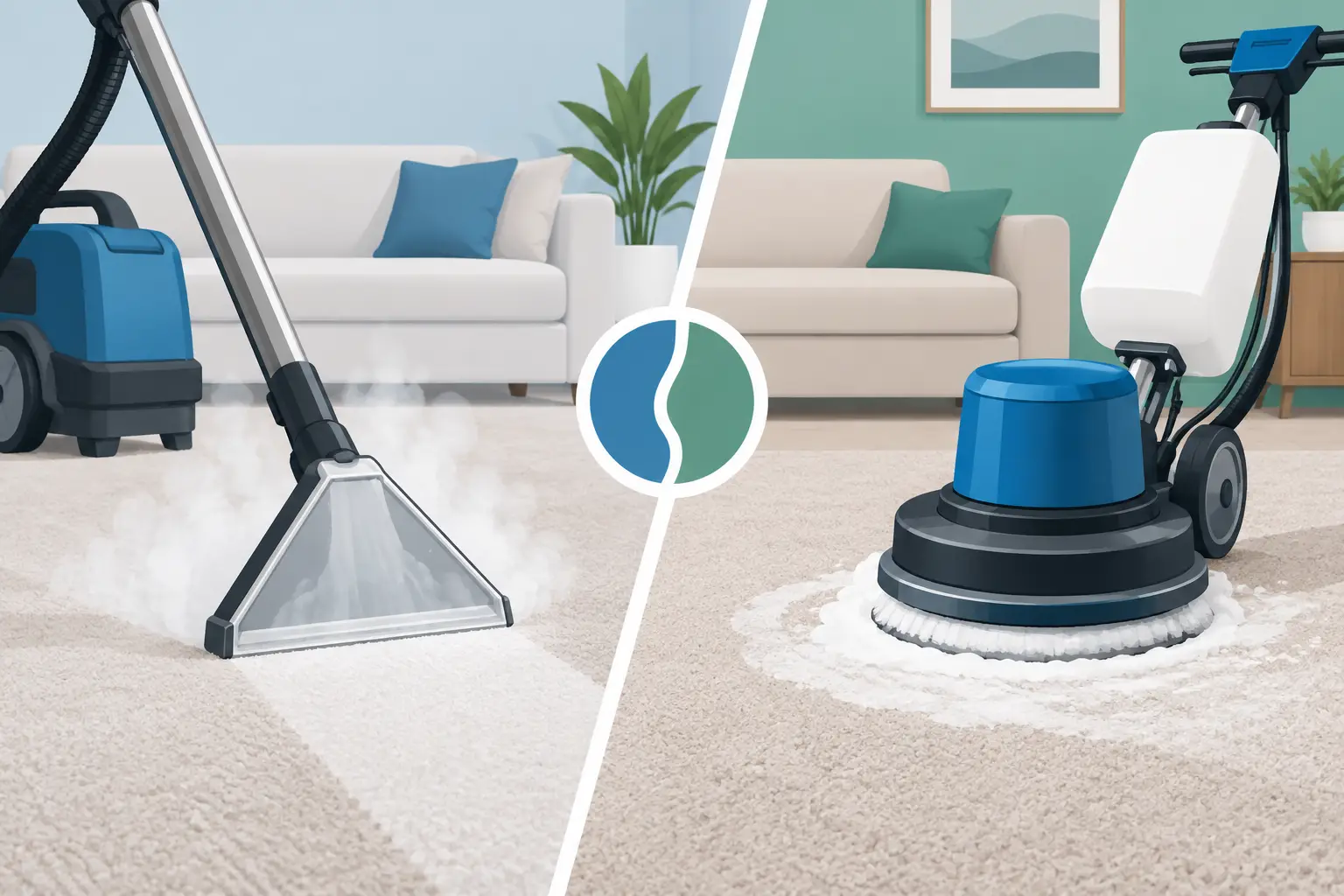
A carpet can look clean after either method and still hold detergent residue, embedded grit, or too much moisture underneath. That is why steam cleaning versus carpet shampooing is not a simple question of which machine looks more powerful. The right choice depends on the carpet’s condition, fiber type, prior treatments, and how quickly your household needs the room back in service.
For busy households, the best method is the one that removes soil without creating a new problem: crunchy fibers, rapid resoiling, a lingering odor, or a carpet that stays damp long enough to disrupt the day. Here is what each process actually does and where the trade-offs matter.
Steam Cleaning Versus Carpet Shampooing: The Real Difference
The names are often used loosely, which causes confusion. Many services call hot-water extraction “steam cleaning,” even though the process does not clean your carpet with dry steam vapor. A professional machine sprays heated water and a cleaning solution into the carpet, then immediately extracts the dirty water, suspended soil, and solution through strong vacuum suction.
Carpet shampooing uses a detergent-based solution that is worked into the carpet with a brush, rotary machine, or shampooer. The agitation can lift visible dirt effectively, especially in heavily trafficked areas. Depending on the process and equipment, the shampoo may be extracted afterward or may remain in the carpet until it dries and is vacuumed out.
The difference comes down to removal. Hot-water extraction is designed to flush and recover contaminants. Traditional shampooing is designed to loosen dirt through detergent and agitation. Both can have a place, but a cleaning method that leaves excess product behind can make a carpet attract soil faster after the appointment.
What people mean by steam cleaning
True steam cleaners use very little water and high-temperature vapor. They can be useful on hard, sealed surfaces, but they are not the standard choice for wall-to-wall carpet cleaning. Carpet fibers, backing, and padding need a process that can remove the loosened dirt rather than simply heat it.
When a carpet cleaner advertises steam cleaning, ask whether they mean hot-water extraction, how much water is used, and how the carpet will be dried. Clear answers matter more than the marketing label.
What carpet shampooing does well
Shampooing uses friction. Brushes work cleaner into the pile, helping release surface grime and traffic-lane discoloration. For a carpet that has been neglected or packed down in hallways and around furniture, agitation can make a visible difference.
The limitation is detergent control. Too much shampoo, insufficient extraction, or poor rinsing can leave a tacky film. That film is not always obvious on cleaning day. A week or two later, the same areas may look dull again because new dirt has adhered to the remaining residue.
Which Method Cleans More Thoroughly?
For most residential carpets, hot-water extraction is usually the more complete option because it combines solution, flushing, and recovery. It is particularly effective for tracked-in soil, pet dander, dusty fibers, spills that have wicked below the surface, and general buildup that routine vacuuming cannot reach.
That does not mean shampooing is automatically wrong. A controlled shampoo or pre-treatment step may be appropriate before extraction when a carpet has heavy soil, oily traffic lanes, or matted fibers. The strongest results often come from using the right chemistry and agitation first, followed by thorough extraction and rinsing.
A professional should not promise that every stain will disappear. Permanent color loss, bleach spots, pet damage, rust, paint, and old stains that have set into the backing may not be fully reversible. Honest carpet cleaning means identifying those limits before treating the area, not treating every mark as a guaranteed win.
Stains are not all the same
A fresh coffee spill, muddy footprints, and a pet accident require different treatment. Shampoo alone may make a stain look lighter, but it may not remove the material causing odor or discoloration beneath the carpet face fibers. Extraction is often more useful for water-soluble spills because it can pull the treatment and contamination back out.
Oil-based stains are different. They may need a specific solvent-based or enzyme treatment before any water-based cleaning begins. Using the wrong product can spread the stain, damage the carpet, or set it further.
Drying Time Is a Practical Decision
Carpet cleaning is not finished when the technician leaves. The carpet must dry properly. With well-performed hot-water extraction, drying commonly takes several hours, though humidity, airflow, carpet thickness, soil level, and the amount of water used can extend that window. New Jersey’s humid summer days can slow the process considerably.
Shampooed carpets can also take hours to dry and may take longer when excess solution is applied. A carpet that remains wet overnight should be taken seriously, especially in humid rooms or areas with limited ventilation. Extended moisture can contribute to odor, wicking, and problems in the carpet backing or padding.
Open windows only when outdoor humidity is lower than indoor humidity. In many cases, running air conditioning, using ceiling fans, and keeping air moving across the carpet is more effective. Avoid placing heavy furniture back on damp carpet, and use protective tabs or blocks if furniture must be returned before the carpet is fully dry.
When Each Method Makes Sense
There is no one-method rule for every home. The better choice depends on the carpet and the result you need.
- Choose hot-water extraction when the carpet has general soil buildup, odors, pet-related concerns, or a history of spills. It is usually the better reset method before a gathering, move, or a deeper home-cleaning appointment.
- Consider shampooing with controlled extraction when traffic lanes are heavily matted or oily and need more agitation before final rinsing.
- Use a low-moisture approach when drying time is the top priority, provided the carpet is not deeply soiled and the process will not leave product behind.
- Pause and request an assessment if the carpet is wool, silk, antique, heavily stained, water-damaged, or still damp from a previous cleaning. These situations need more care than a standard machine pass.
For renters, move-out cleaning adds another consideration: appearance is not the only issue. Document existing stains before treatment, especially if they appear to be bleach damage, burns, or permanent discoloration. Cleaning can improve soil and odor, but it cannot restore missing dye or melted fiber.
Protect the Carpet Between Professional Cleanings
The fastest way to wear down a carpet is to let dry grit remain in it. Sand, dust, and tiny particles act like abrasives as people walk across the floor. Regular vacuuming matters more than many homeowners realize, particularly in entryways, stairs, hallways, and the paths between the kitchen, living room, and bedrooms.
Address spills promptly by blotting, not scrubbing. Work from the outside of the spill toward the center, use a clean white cloth, and avoid soaking the carpet. Scrubbing can distort fibers and push a stain deeper. Avoid pouring random household products onto a stain, too. Some mixtures leave residue, alter carpet color, or create a treatment problem later.
Professional cleaning also works best as part of a maintenance plan rather than an emergency response after years of buildup. A properly maintained carpet is easier to clean, dries more predictably, and holds its appearance longer.
What a Professional Carpet Cleaning Visit Should Include
Before work starts, a dependable provider should inspect the carpet, identify high-traffic areas and stain concerns, explain realistic expectations, and confirm the cleaning method. The process should include appropriate pre-treatment, soil removal, and enough extraction to avoid leaving the carpet saturated.
Ask about the solution being used, especially if children, pets, allergies, or eco-conscious preferences are part of the decision. Also ask whether the quoted price includes stain treatment, deodorizing, furniture moving, or other add-ons. Clear scope prevents surprise charges after the work has begun.
At Best Maids Ever, carpet cleaning can be scheduled as an add-on when a home needs more than surface cleaning. The goal is straightforward: address the condition of the carpet with a defined process, clear expectations, and no vague promises about what cleaning can and cannot restore.
A clean carpet should feel fresh underfoot, not stiff with product or damp for days. Choose the process based on soil level, drying needs, and the condition of the fibers, then give the carpet the care it needs between cleanings. That is how a one-time reset becomes a home that stays easier to maintain.