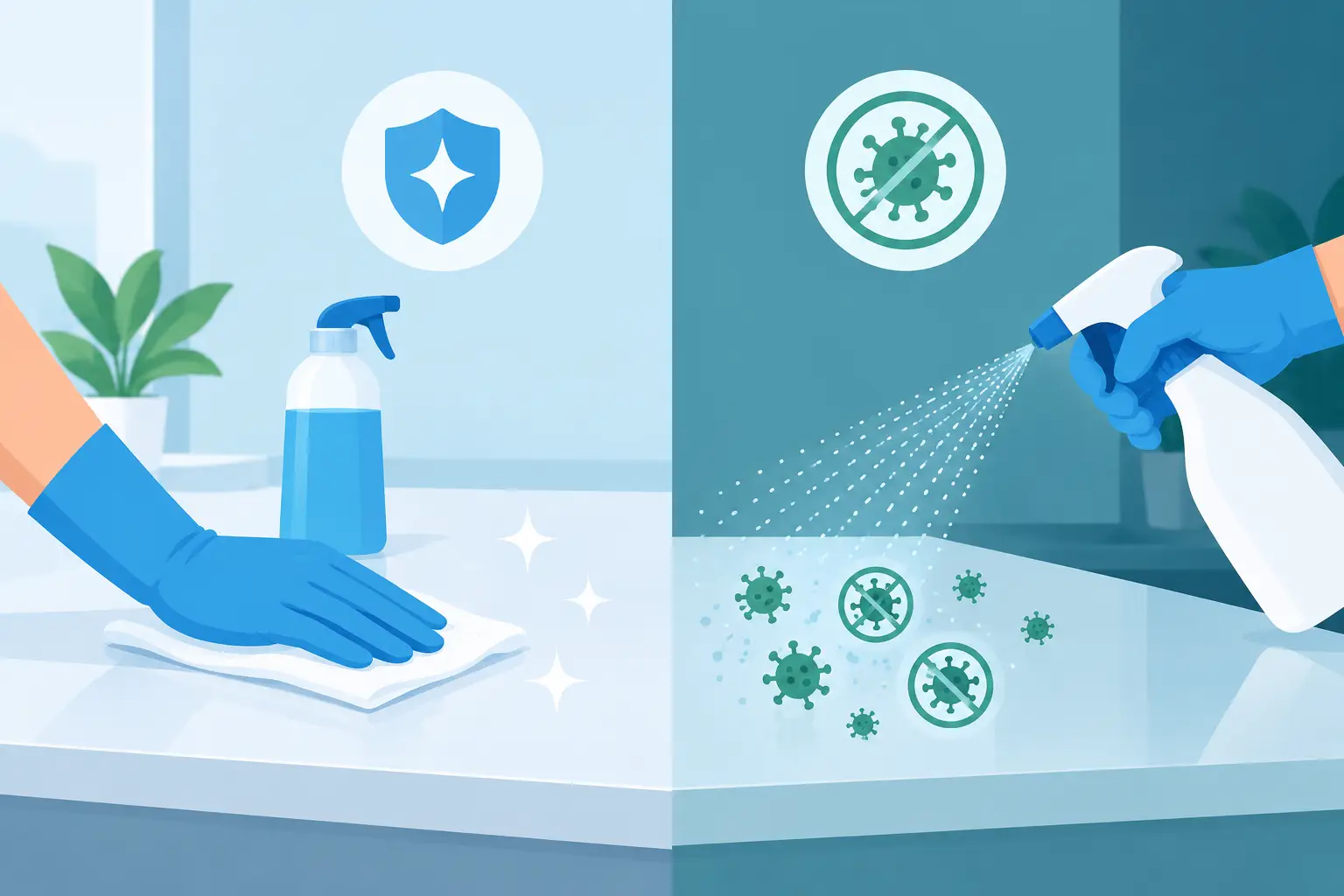
A kitchen counter can look spotless and still need more than a quick wipe. That is where sanitizing versus disinfecting surfaces becomes a practical decision, not just a wording difference on a spray bottle. The right approach depends on the room, the material, who uses the space, and what happened there.
For a busy household, the goal is not to treat every doorknob like an operating room. It is to clean with purpose: remove soil first, use the appropriate product second, and give it enough time to work. That produces a home that is genuinely clean, not merely fresh-smelling.
Sanitizing versus disinfecting surfaces: the real difference
Cleaning, sanitizing, and disinfecting are separate steps with different jobs. They often happen together, but they should not be treated as interchangeable.
Cleaning removes visible dirt, grease, crumbs, dust, and some germs from a surface. Soap, detergent, water, and physical wiping do most of the work. A proper clean is the foundation for everything that follows because soil can block a sanitizer or disinfectant from reaching the surface evenly.
Sanitizing lowers the number of certain bacteria on a surface to a level considered safer by public-health standards. In homes, sanitizing is commonly used on food-contact surfaces such as countertops, cutting boards, high-chair trays, and refrigerator shelves after they have been cleaned. It is a sensible routine step when a surface needs an added level of hygiene without the heavier chemical approach that may be unnecessary for daily use.
Disinfecting uses an EPA-registered product to kill or inactivate specific germs listed on that product's label. Depending on the product and its label claims, those germs may include bacteria and viruses. Disinfection is the stronger intervention, but it is not automatic. The product must be appropriate for the surface, diluted correctly if required, and left visibly wet for the stated contact time.
That last point is where many well-intended cleaning routines fail. Spraying a disinfectant and wiping it dry immediately may leave the surface shiny, but it may not deliver the disinfection claim on the label.
Start with cleaning, even when disinfecting is needed
Disinfectants are not a substitute for removing grime. A bathroom vanity with toothpaste residue, soap buildup, and hair needs to be cleaned before it can be effectively disinfected. The same applies to a kitchen counter after meal prep or a sticky dining table after a family gathering.
This is also why professional cleaning has a sequence. We do not apply products randomly and hope for the best. Surfaces are cleared, soils are removed, and products are selected based on the task. That order protects finishes, avoids wasted product, and creates more consistent results.
For routine household cleaning, soap or a general-purpose cleaner plus a clean microfiber cloth is often sufficient. If someone in the home is sick, if raw meat or eggs contacted a surface, or if a high-touch area needs extra attention, follow cleaning with sanitizing or disinfecting as appropriate.
When sanitizing makes more sense
Sanitizing is usually the practical choice for surfaces that come into frequent contact with food, hands, or children's belongings but do not require constant hospital-level treatment. Think kitchen counters after preparing a meal, dining tables, high-chair trays, reusable lunch containers, and certain hard toys.
The trade-off is that sanitizers may have narrower germ claims than disinfectants. That is not a weakness when the job is routine food-area hygiene. It is simply the right level of treatment for the situation.
Always check the product label before using it on a food-contact surface. Some products require a potable-water rinse afterward. Others are not intended for surfaces where food is prepared at all. Do not assume a product is food-safe because it smells clean or is marketed for the kitchen.
A few practical habits help keep sanitizing effective. Use a fresh cloth rather than spreading residue with the same rag used on cabinets. Replace sponges frequently, since a sponge can hold moisture and bacteria. Keep raw-protein prep separate from produce prep whenever possible, and clean the sink after rinsing poultry packaging, produce, or heavily soiled dishes.
When disinfecting is worth the extra step
Disinfection is most useful when there is a clear reason for it. During a household illness, it makes sense to disinfect high-touch, nonporous surfaces such as faucet handles, toilet flush levers, light switches, remote controls, phone cases, cabinet pulls, and frequently used doorknobs.
It is also appropriate after bodily-fluid cleanup, around a bathroom used by someone who is ill, and on surfaces that may have been exposed to pathogens through diaper changes, pet accidents, or contaminated laundry. In shared offices, gyms, and common areas, a structured disinfection routine may be appropriate for high-touch points, especially during periods of increased illness.
More disinfectant is not always better. Frequent use of harsh products can dull stone, damage wood finishes, weaken certain plastics, and irritate skin or airways. A natural-stone countertop, for example, needs a product approved for stone. Unfinished wood and many upholstered surfaces cannot be disinfected the same way as a sealed countertop.
For these materials, follow the manufacturer's care instructions. If a surface cannot safely tolerate a disinfectant, thorough cleaning, laundering when possible, and allowing the material to dry fully are often the safer choices.
Contact time is not optional
Every disinfectant has a contact time, sometimes called dwell time. This is the amount of time the surface must remain wet for the product to achieve its stated germ-killing claim. It may be one minute, several minutes, or longer. The label is the authority.
Do not guess. Apply enough product to wet the surface, set a timer if needed, and allow the product to sit for the full stated time. If it dries before the time is up, reapply according to the directions. Then wipe or rinse only if the label instructs you to do so.
This matters particularly on vertical or uneven surfaces. A quick mist on a shower handle may evaporate quickly, while a counter may stay wet longer. Product amount, room temperature, airflow, and surface texture all affect contact time.
Safe product use matters as much as germ control
Never mix cleaning chemicals. Bleach should never be combined with ammonia, vinegar, alcohol, acids, or another cleaner unless a product label specifically instructs it. Mixing products can release dangerous fumes, even when both products are common household cleaners.
Use disinfectants in a ventilated area, keep them away from children and pets until surfaces are dry or rinsed as directed, and wear gloves when the label calls for them. Store products in their original containers so the instructions and safety information stay with the product.
If you use a concentrated cleaner or disinfectant, measure the dilution exactly. Stronger is not more effective when a formula is designed for a specific water-to-product ratio. An incorrect dilution can leave residue, harm surfaces, or reduce performance.
A practical routine for high-touch surfaces
Most homes do not need a full disinfection routine every day. A disciplined schedule works better than overusing chemicals. During normal weeks, clean high-touch areas regularly and sanitize food-prep surfaces after cooking. Add targeted disinfection when illness, contamination, or a shared high-traffic environment calls for it.
Pay close attention to the surfaces people touch without thinking: refrigerator handles, microwave buttons, coffee makers, drawer pulls, light switches, bathroom fixtures, toilet handles, remote controls, keyboards, and entry-door hardware. Electronics need special care. Turn them off, follow the manufacturer's guidance, and avoid saturating ports, seams, or screens.
In a home with infants, older adults, immunocompromised residents, or someone recovering from illness, the threshold for targeted disinfection may be lower. In a healthy household with no specific exposure, routine cleaning and sensible sanitizing usually provide the right balance.
What a deep clean changes
A maintenance clean works best when the home has already been properly reset. Built-up grease, soap scum, dust, and clutter make it harder to clean surfaces thoroughly and harder to see where extra sanitation or disinfection is needed.
That is why Best Maids Ever begins recurring service with a 1st Time Deep Clean. The initial reset addresses the detail work that routine visits are designed to maintain, including interior appliance cleaning. From there, a consistent cleaning schedule helps keep kitchens, bathrooms, and high-touch areas under control without turning every weekend into a catch-up project.
A clean home is not defined by how many products sit under the sink. It is defined by using the right method on the right surface, at the right time. Clean first, sanitize where everyday hygiene calls for it, and disinfect with care when there is a real reason to do so.