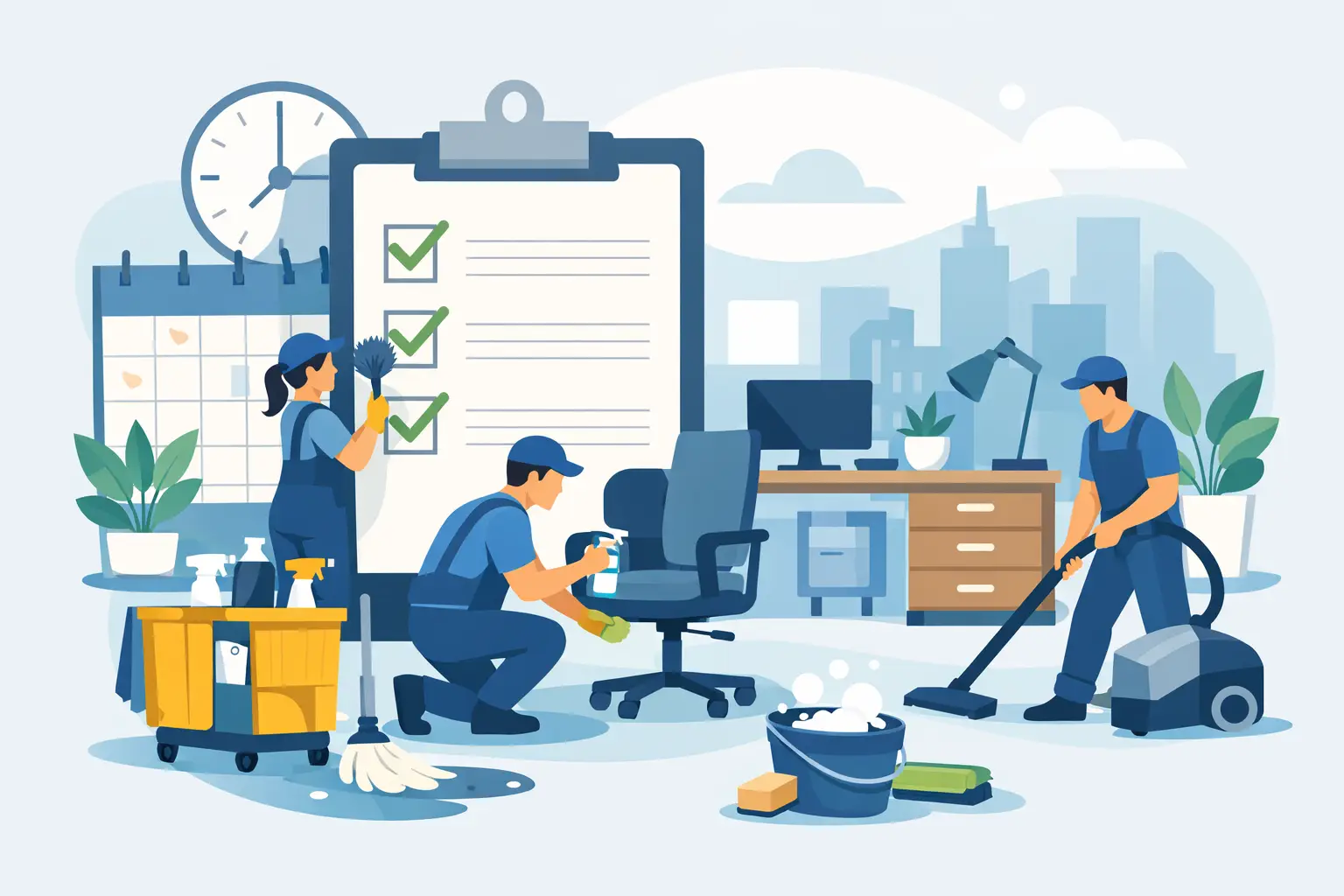
A clean office is not just about looking professional when a client walks through the door. It affects how employees work, how germs move through shared spaces, and whether small messes become expensive problems. An office cleaning checklist - daily, weekly, monthly - gives every task a clear place on the calendar, so cleanliness does not depend on who happened to notice the spill first.
The right schedule depends on your office size, traffic level, number of restrooms, and whether staff eat at their desks. A quiet professional suite needs a different routine than a busy medical-adjacent office, sales floor, or shared workspace. The principle stays the same: handle high-touch and high-traffic areas often, then schedule detailed work before buildup becomes visible.
Start With a Realistic Office Cleaning Schedule
A checklist only works if it matches the way your office operates. Assigning monthly tasks to a team already stretched thin is not a cleaning plan. It is a guarantee that those tasks will be skipped.
Start by walking the space as an employee or visitor would. Begin at the entrance, move through the lobby, workstations, break room, restrooms, conference rooms, and storage areas. Look for the surfaces everyone touches, the areas that collect food or moisture, and the spots clients can see immediately.
Then decide what belongs in three categories. Daily cleaning protects health, prevents odors, and keeps the office presentable. Weekly cleaning removes the dirt that accumulates despite daily upkeep. Monthly cleaning addresses edges, neglected surfaces, and details that affect the condition of the building over time.
For most offices, daily work should happen after business hours or before the first employee arrives. Weekly and monthly work can be completed during lower-traffic periods. If your team is responsible for in-house tasks, make ownership specific. “Clean the break room” is vague. “Empty break-room trash and sanitize counter surfaces each evening” is accountable.
Daily Office Cleaning Checklist
Daily tasks should focus on the areas employees and visitors use constantly. These are the jobs that keep a normal workday from creating a visible mess by the end of the week.
- Empty trash and recycling, especially in restrooms, break rooms, reception areas, and any location where food is discarded. Replace liners as needed.
- Clean and disinfect high-touch surfaces, including door handles, light switches, elevator buttons, reception counters, shared phones, copier controls, refrigerator handles, and conference-room remotes.
- Wipe desks and work surfaces where service allows. Employees should clear personal items and paperwork so cleaning can be completed properly without risking confidential documents.
- Clean restroom fixtures, counters, mirrors, sinks, and toilets. Restock toilet paper, hand soap, paper towels, and other supplies before they run out.
- Wipe break-room counters, tables, microwave exteriors, coffee stations, and sink areas. Remove food debris and address spills immediately.
- Vacuum or sweep entranceways, walkways, break rooms, and other high-traffic floors. Spot mop hard flooring when weather, food spills, or foot traffic require it.
Daily cleaning is where consistency matters most. A spotless conference table does little good if the restroom is out of soap or the lobby trash is overflowing by lunchtime. If there is only time for a short service window, prioritize restrooms, trash, touchpoints, floors at the entrance, and the break room.
What Daily Cleaning Does Not Cover
Daily service is not a substitute for detail work. It keeps the space controlled, but it will not remove dust from vents, clean baseboards, wash interior glass, or address buildup inside appliances. Trying to force every task into a daily visit can also waste budget on low-value repetition while important deep-cleaning tasks get ignored.
Weekly Office Cleaning Checklist
Weekly cleaning is the reset that keeps routine daily work from becoming superficial. It should reach beyond obvious spills and visible trash to the surfaces where dust, fingerprints, and grime quietly build up.
A strong weekly checklist includes thorough vacuuming of carpeted areas, including under accessible furniture and along edges. Hard floors should be mopped with the appropriate product, not simply spot-treated. Reception furniture, conference-room chairs, ledges, window sills, and low shelves should be dusted and wiped.
In the kitchen or break room, wipe cabinet fronts, clean the inside of the microwave, sanitize the refrigerator exterior, and clean around small appliances. Check for expired food if your office policy permits removal. The sink and drain area deserve extra attention because moisture and food residue create odors quickly.
Restrooms need a more detailed weekly service as well. Clean partitions, lower walls, dispenser exteriors, base areas around toilets, and floor edges. Restock supplies in bulk so the next week does not begin with an empty dispenser.
Conference rooms should be checked for fingerprints on glass, dust on screens, marks on walls, and debris under tables. This is especially important in offices that host interviews, client meetings, training sessions, or presentations. People notice the room where they are asked to sit.
Monthly Office Cleaning Checklist
Monthly tasks protect the office from gradual deterioration. They are easy to postpone because they rarely look urgent until they become obvious. By then, the work often takes longer and may require specialty products or equipment.
Schedule dusting of high surfaces such as vents, ceiling corners, blinds, light fixtures, upper shelving, and the tops of cabinets. Wipe baseboards, door frames, and wall marks where appropriate. Clean interior glass and partitions, including areas that are not part of the daily fingerprint route.
Monthly service is also the right time to move lightweight furniture and vacuum or mop beneath it. Clean chair bases, desk legs, and the areas around printers and copier stations, where paper dust and toner residue can collect. Check corners, stairwells, supply rooms, and other low-visibility areas that may not receive regular attention.
Break-room appliances need a set schedule. Clean the refrigerator interior, remove old food according to office policy, wipe shelves, and clean seals. Deep-clean the microwave interior and address spills beneath coffee equipment. If your office has a dishwasher, inspect the filter and run a cleaning cycle according to the manufacturer’s instructions.
For carpeted offices, monthly spot treatment can prevent stains from becoming permanent. Full carpet cleaning is usually less frequent, but high-traffic entry areas, hallways, and break rooms may need professional attention more often. It depends on weather, foot traffic, pets in pet-friendly workplaces, and how often food is served on-site.
Keep the Checklist Useful, Not Decorative
Many offices post a cleaning checklist in a closet, then never use it to verify results. A useful checklist has a service frequency, a responsible party, and a way to confirm completion. It should also identify supplies that must be stocked, from disinfectant and liners to soap and paper products.
Review the schedule after the first month. If restrooms look neglected by Wednesday, increase the frequency of touch-up service. If monthly high-dusting is unnecessary in a low-traffic office, redirect that time toward floors or shared kitchen areas. The goal is not to follow a generic template perfectly. The goal is to keep your specific workplace consistently clean.
This is also where professional cleaning makes a measurable difference. Best Maids Ever can build commercial cleaning service around the actual use of your office, with a clear scope and dependable recurring schedule. That removes the usual uncertainty around who is cleaning what and when it was last done.
Common Checklist Mistakes That Cost Offices Time
The most common mistake is treating all areas equally. A private office used by one person does not need the same attention as a restroom used by twenty. Put your service time where contamination, appearance, and foot traffic are highest.
Another mistake is relying only on disinfectant. Disinfectant works best after dirt and residue are removed. A sticky break-room counter needs cleaning first, then sanitizing or disinfecting as appropriate. Using one product for every surface can also damage flooring, screens, wood finishes, or stone.
Finally, do not leave cleaning standards to memory. Staff turnover, vacations, busy periods, and changing office layouts all disrupt informal routines. A written schedule gives your team or cleaning provider a fixed standard to meet every visit.
A well-run office should feel ready before anyone starts the day. Set the standard, assign the work, and adjust the schedule when traffic changes. Cleanliness becomes easier to maintain when it is treated as an operating system, not an occasional rescue project.