
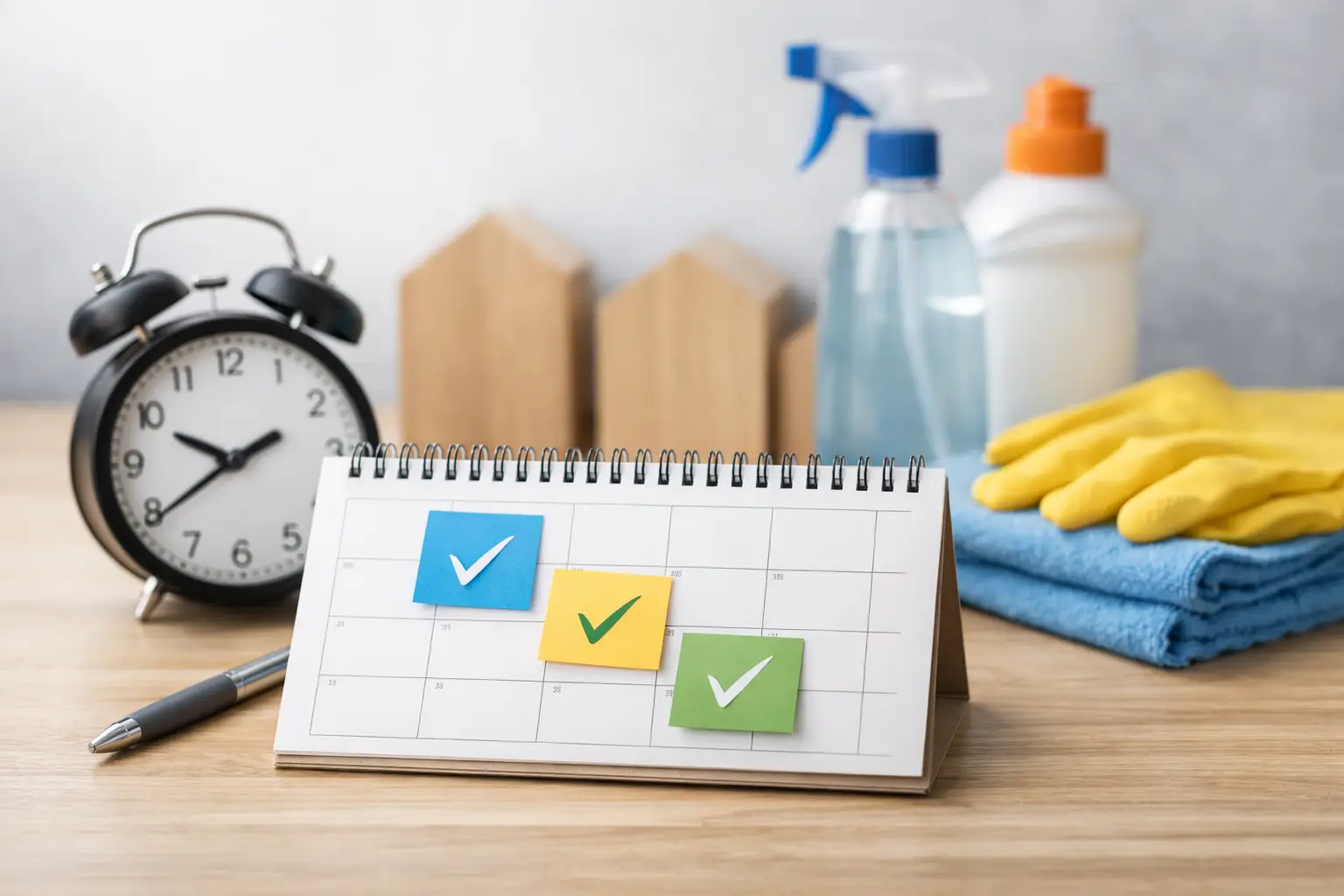
A home can look fine on Tuesday and feel out of control by Saturday. That gap is exactly why many people struggle with how to choose recurring cleaning frequency. If the schedule is too light, the house slips. If it is too aggressive, you pay for more service than you need. The right plan keeps your home consistently clean without making you think about it every week.
For most households, the decision comes down to three real factors - how fast your home gets dirty, how much cleaning you want to handle yourself, and how high your standard is. There is no universal answer, but there is a clear way to choose one.
How to choose recurring cleaning frequency without guessing
Start with a simple question: how long does your home stay comfortably clean after a full reset?
That matters more than square footage alone. Two homes with the same layout can need very different service schedules. A quiet two-bedroom condo with no pets may hold its shape for weeks. A four-bedroom house with kids, a dog, and people working from home may need attention again almost immediately.
This is also why a strong recurring plan usually starts with a deep clean. If the base condition is already uneven, you are not really maintaining cleanliness - you are chasing buildup. Beginning with a full reset makes weekly, bi-weekly, or monthly service actually work the way it should.
Weekly cleaning is best when the house turns over fast
Weekly service is usually the right fit for busy households, families with children, pet owners, larger homes, and anyone who wants a consistently polished space with minimal personal effort.
If your bathrooms lose their clean look within a few days, your kitchen counters never stay clear, or floors collect dust, crumbs, and paw prints almost immediately, weekly service is not excessive. It is efficient. It keeps dirt from stacking up and reduces the amount of scrubbing needed each visit.
Weekly cleaning also works well for homeowners who entertain often, remote workers who are home all day, and people who simply do not want to spend weekends catching up. It is the most reliable option if your standard is high and you want the house to stay close to guest-ready.
The trade-off is obvious - weekly service is a bigger commitment than bi-weekly or monthly cleaning. But for the right household, it is the schedule that prevents the cycle of mess, frustration, and marathon cleaning sessions.
Bi-weekly cleaning is the most balanced option
For many homes, bi-weekly service is the sweet spot. It offers enough consistency to stay ahead of dust, bathrooms, kitchen grime, and floor buildup without the cost of weekly visits.
This frequency works especially well for working professionals, couples, smaller families, and organized households that can manage light pickup between appointments. If you do some daily upkeep but do not want to handle the heavier cleaning yourself, bi-weekly service usually makes the most sense.
It is also the most forgiving schedule. Homes do not have too much time to drift, and the cleaner can maintain standards instead of spending each visit trying to recover the space. That is a big difference in both results and efficiency.
If you are unsure where to start, bi-weekly is often the safest first choice. It gives you enough support to feel the impact of recurring service without overcommitting.
Monthly cleaning works for lighter-use homes
Monthly cleaning can work, but only when the home stays fairly controlled between visits. This is usually a good fit for one-person households, part-time residences, very tidy couples, or homes where the owners are willing to do regular in-between maintenance.
The main thing to understand is that monthly service is not true hands-off cleaning. It is structured support. You will still need to stay on top of dishes, clutter, spills, and likely some bathroom and kitchen upkeep between appointments.
If no one in the home wants to clean in between visits, monthly service usually feels too spread out. By the time the next appointment arrives, the home may need more than routine maintenance. That can create frustration because the schedule is no longer matching the real condition of the space.
What affects recurring cleaning frequency most
Household size and traffic
More people means more use. More use means more buildup. It is that simple.
A home with two adults who leave for work all day will generally stay cleaner longer than a home with four people, two kids, after-school activity, and everyone eating in shifts. When you are deciding on frequency, look at traffic patterns, not just room count.
Pets
Pets change the equation fast. Hair, dander, tracked-in dirt, nose prints, and accidents all compress the timeline between cleanings.
Even well-managed pet homes often benefit from weekly or bi-weekly service because floors, baseboards, furniture surfaces, and bathrooms feel the impact first. If you have more than one pet, lighter schedules can become unrealistic quickly.
Bathrooms and kitchens
These two areas usually determine the schedule. They are used hard, they show grime quickly, and they affect how clean the whole home feels.
If your bathroom loses its fresh look within a week or your kitchen gets greasy and cluttered fast, your recurring frequency should reflect that. People often underestimate how much these spaces drive the overall cleaning burden.
Your tolerance for visible mess
Some people are comfortable letting dust collect for a while. Others notice fingerprints on glass, smudges on stainless steel, or crumbs along baseboards immediately. Neither standard is wrong, but it does affect the right cleaning plan.
If visible mess bothers you early, choose a schedule that prevents it instead of reacting to it.
Budget and service priorities
Budget matters, but it should be matched to reality. Choosing monthly service to save money only works if the home can actually stay under control that long. Otherwise, you end up paying for a schedule that never fully catches up.
A better approach is to choose the lowest frequency that still protects the condition of your home. That keeps the service efficient and the results consistent.
When to adjust your cleaning schedule
Your first frequency choice does not have to be permanent. A good recurring plan should match your life as it is now.
If you add a pet, bring home a new baby, start working remotely, host family for the season, or move from an apartment to a larger house, your cleaning needs may change. The opposite is true too. If the kids are out of the house or you are traveling more, you may be able to scale back.
The right schedule is not the one that sounds reasonable on paper. It is the one that keeps the home stable with the least stress.
A practical way to decide between weekly, bi-weekly, and monthly
If your home feels off again within a few days of being cleaned, choose weekly. If it stays in good shape for about two weeks with only light upkeep, choose bi-weekly. If it can hold steady for close to a month and you do not mind handling smaller cleaning tasks yourself, monthly may be enough.
Be honest about what you will actually do between visits. Many people plan around their best intentions, not their real schedule. That is how they end up with a frequency that looks good in theory and fails in practice.
For a lot of New Jersey households, the most effective setup is a first-time deep clean followed by bi-weekly maintenance. It creates a true reset and then keeps the home from slipping back into buildup. Best Maids Ever is built around that structure for a reason - it is the most reliable path to consistent results.
How to know you chose the right recurring cleaning frequency
You chose the right schedule if your home rarely feels behind, your cleaner is maintaining instead of rescuing, and you are not spending your off-hours doing the work you meant to outsource.
That is the goal. Not a perfect home for one day, but a clean home that stays under control.
If you are still debating, choose the schedule that matches your actual lifestyle, not the one you wish you had. A cleaning plan should remove stress, not create another standard you cannot maintain. Start with a proper reset, pick the frequency your home truly needs, and let consistency do the heavy lifting.