
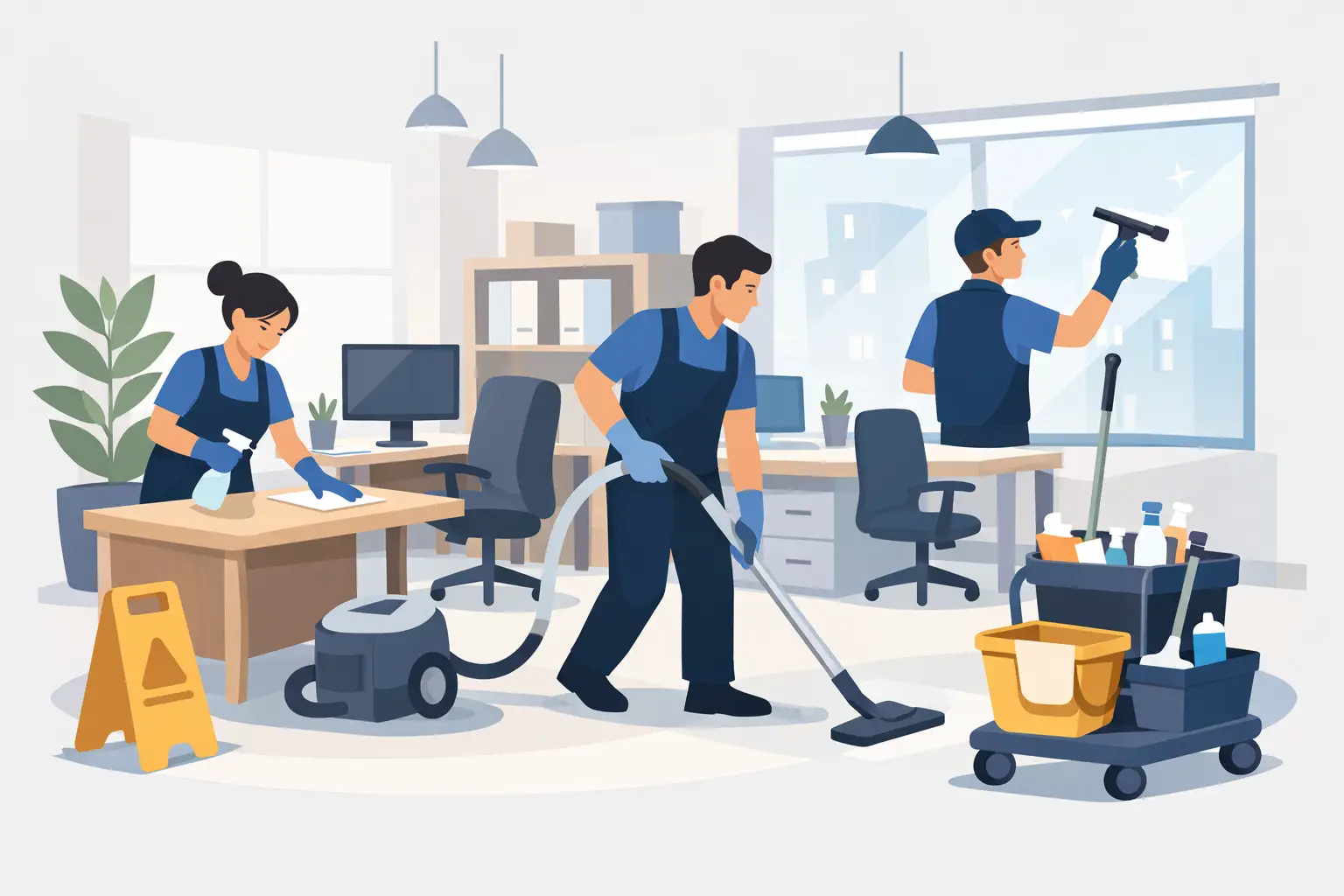
A small office can look fine at 9 a.m. and feel neglected by 3 p.m. Coffee rings build up in the break room, restroom supplies run low, fingerprints appear on glass doors, and trash starts sending the wrong message to employees and visitors. Commercial cleaning for small offices solves that problem when it is built around a clear scope, a dependable schedule, and a team accountable for the details.
Small spaces do not require casual cleaning. In many ways, they require more discipline. A missed restroom visit or an overflowing trash can is far more noticeable in an office with eight people than in a building with eight floors. The goal is not to make the office look cleaned once in a while. It is to keep the workplace consistently ready for the next client, employee, interview, or delivery.
Why Small Offices Need a Defined Cleaning Plan
Business owners often delay professional cleaning because the office is small enough for staff to handle. That works for a short time. Then the responsibility becomes uneven, no one knows who replaced the paper towels, and important surfaces get wiped only when they look visibly dirty.
A professional plan creates a standard. It separates daily-use needs from periodic detail work and makes sure the same tasks are completed at every visit. That consistency matters in offices where employees share restrooms, kitchens, meeting rooms, and high-touch equipment.
It also protects productive time. Paying a manager, office coordinator, or sales employee to scrub a microwave or vacuum under desks is rarely a good use of payroll. A cleaning team arrives with the process, products, and equipment already in place.
What Commercial Cleaning for Small Offices Should Cover
The right scope depends on your layout, traffic, business hours, and industry. A quiet professional office has different needs than a medical-adjacent practice, real estate office, daycare administration suite, or customer-facing showroom. Still, every reliable service plan should address the areas that shape cleanliness, health, and first impressions.
A standard recurring visit commonly includes:
- Emptying trash and replacing liners as needed
- Cleaning and disinfecting restrooms, including fixtures, counters, mirrors, and touchpoints
- Wiping break room counters, tables, sinks, and exterior appliance surfaces
- Vacuuming carpets and cleaning hard floors
- Dusting accessible office surfaces, ledges, and furniture
- Disinfecting high-touch areas such as door handles, light switches, shared phones, and conference tables
That is the maintenance layer. It keeps the office presentable week after week. It should not be confused with a first-time deep clean.
Start With a Reset, Not a Quick Pass
When an office has been cleaned inconsistently, moving straight into basic recurring service can leave behind the buildup employees have learned to ignore. Baseboards, interior glass, chair legs, detailed restroom areas, break room appliances, and corners behind furniture may need more attention than a routine visit allows.
A first-time deep clean gives the office a proper reset. Once the baseline is clean, ongoing service can maintain it efficiently. This is the same logic behind any well-run cleaning program: fix the condition first, then protect it with a schedule that matches actual use.
At Best Maids Ever, that process is central to how recurring cleaning is structured. It avoids the frustrating cycle of surface-level visits that never fully catch up.
How Often Should a Small Office Be Cleaned?
There is no single schedule that fits every office. The correct frequency is based on people, traffic, and how the space is used, not just square footage.
A small office with two or three people, no regular visitors, and limited food preparation may do well with biweekly service. An office with ten employees, a shared restroom, daily lunches, and client meetings usually benefits from weekly cleaning. High-traffic spaces with frequent walk-ins may need multiple visits each week, especially for floors, restrooms, and touchpoints.
Monthly service can work for a low-use suite, but it is not a cure for daily mess. If employees are already emptying full trash bins, dealing with odors, or cleaning restrooms between visits, the schedule is too light.
The simplest test is this: does the office still look and feel professionally maintained the day before the next cleaning? If the answer is no, increase the frequency or adjust the scope.
The Details That Separate Reliable Service From Cheap Service
Low pricing can be tempting, particularly for a small operation watching overhead. But the lowest quote often excludes the very controls that make commercial cleaning dependable. Vague task lists, inconsistent arrival times, rotating unfamiliar workers, and surprise charges create more work for the office manager, not less.
A professional cleaning company should be direct about what is included, what requires additional time, and how service concerns are handled. You should know whether the crew is insured, whether staff are background-checked, who has access to your office, and what happens if a task is missed.
This is especially relevant when cleaners work after business hours. Office keys, alarm instructions, proprietary documents, employee belongings, and client information require a controlled process. Cleaning teams should follow access instructions precisely and avoid handling papers, files, computer equipment, or personal items unless the agreed scope requires it.
A redo guarantee also matters. No team is perfect on every visit, but a dependable company does not argue over a legitimate concern. It corrects the issue promptly and uses that feedback to improve the next service.
Build a Scope Around Your Actual Office
Generic checklists are a starting point, not a complete plan. Before service begins, identify the areas that affect your operation most. A law office may prioritize reception seating, glass, and conference rooms. An accounting firm may need extra attention after tax season. A busy sales office may need break room and restroom service more than detailed desk dusting.
Be clear about boundaries, too. If you want interior refrigerator cleaning, carpet spot treatment, interior windows, supply restocking, or detailed appliance cleaning, say so before the first visit. These are reasonable needs, but they may not belong in a basic maintenance scope. Clear expectations prevent surprise upsells and prevent disappointment later.
It helps to decide who on your team will report issues. One point of contact keeps requests organized and avoids conflicting instructions from several employees. That person can communicate schedule changes, special events, building access updates, or areas that need extra attention.
Prepare the Office for Better Results
Professional cleaners can work around a normal office, but clutter changes what can be cleaned effectively. Desks covered in loose paperwork cannot be fully dusted without risking important documents. Floors blocked by boxes or cords cannot be vacuumed properly. A quick end-of-day reset by staff makes each cleaning visit more productive.
That does not mean employees need to clean before cleaners arrive. It means putting away confidential files, clearing personal dishes, and keeping walkways accessible. The cleaning team handles the cleaning. The office simply makes the surfaces and floors available to be cleaned.
Questions to Ask Before Hiring a Cleaning Company
Ask for a written scope rather than relying on general promises. Confirm the service frequency, arrival window, access process, and tasks included in each visit. If your office has carpet, ask whether vacuuming is included and how deeper carpet cleaning is handled.
You should also ask about insurance, employee screening, quality checks, and the process for reporting a concern. These questions are not difficult or overly cautious. They are standard business controls, and a professional provider should answer them clearly.
Finally, consider communication. A cleaning company does not need to be in your inbox every day, but it should be easy to reach when your needs change. Offices add employees, host events, move suites, and face seasonal mess. The service should be structured enough to stay consistent and flexible enough to respond.
A clean small office is not a luxury detail. It is part of how your team works and how your business is perceived. Start with a proper reset, choose a schedule that reflects real traffic, and expect clear accountability at every visit.