
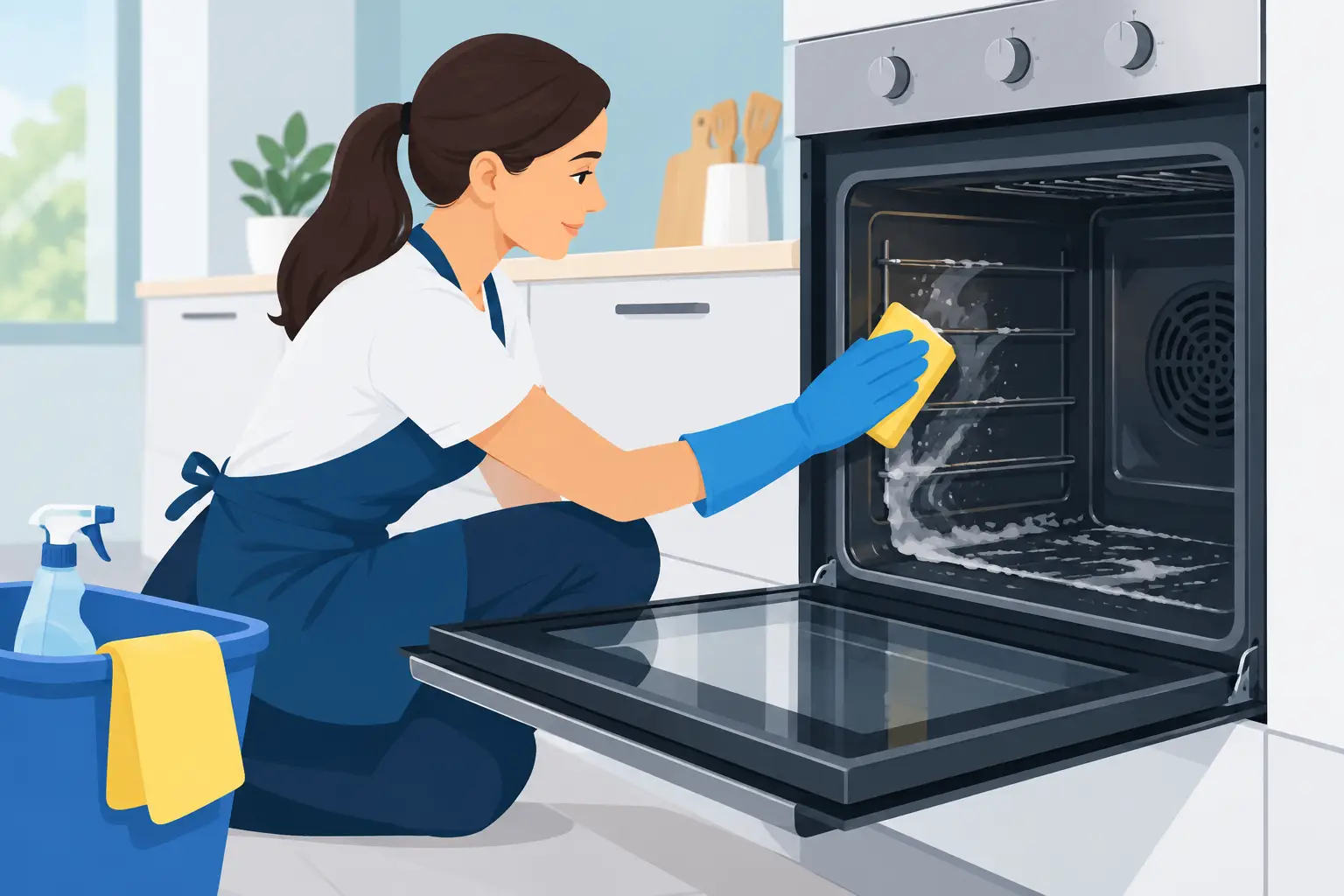
That dark, sticky film inside your oven is not ordinary dust. It is months or years of baked-on grease, food spills, smoke residue, and carbonized sugar. So, can cleaners clean oven interiors? Yes. A professional cleaner can remove a significant amount of oven buildup safely and efficiently, provided the oven is cool, accessible, and the service scope includes interior appliance cleaning.
The honest answer is that results depend on the oven’s condition. A regularly used oven with light residue can often be brought back to a clean, presentable standard. An oven with years of neglected grease may improve dramatically, but deep carbon buildup, damaged enamel, and permanently discolored glass are not always fully reversible in one visit.
What Professional Oven Interior Cleaning Usually Includes
A proper oven interior clean focuses on the areas that collect grease and burned-on food: the oven cavity, interior door glass, door edges, racks, and the bottom surface. The cleaner uses appropriate degreasers, non-abrasive tools, and controlled scrubbing to break down residue without unnecessarily damaging the finish.
The process should not be a quick wipe with an all-purpose spray. Oven grease needs time to loosen. A cleaner may apply product, allow it to dwell, work on removable racks separately, then return to the oven for detailed wiping and spot treatment. That is why interior oven cleaning takes more time than cleaning a countertop or stovetop.
The Oven Door and Glass
The inside of the oven door is one of the most noticeable areas because every drip, splatter, and smoke mark is visible through the glass. Surface grease and fresh residue are generally very cleanable. Brown staining baked into the glass or residue trapped between double-pane glass may be more difficult.
A cleaner can clean the accessible interior glass and door frame. Disassembling an oven door to reach sealed internal glass panels is generally outside routine house cleaning. It can create a safety issue, void a manufacturer warranty, or cause alignment problems if it is not reassembled correctly.
Oven Racks and the Oven Cavity
Racks often respond well to soaking and degreasing, although older chrome racks may retain dark marks even after they are cleaned. Inside the cavity, the goal is to remove loose crumbs, grease, burned food, and sticky film from accessible surfaces.
Heating elements, gas components, vents, ignition areas, and electronic controls require care. They should not be saturated with cleaner or scraped aggressively. Professional cleaning means knowing where to apply effort and where to protect the appliance.
Can Cleaners Clean Oven Interiors Safely?
They can, but the method matters. The oven must be completely cool before cleaning begins. Strong chemical fumes should be managed with ventilation, and cleaners should use products suitable for the oven’s finish and manufacturer guidance.
The best approach is not always the strongest chemical. Heavy-duty oven cleaner can be effective on baked-on grease, but it may be inappropriate for certain self-cleaning ovens, continuous-clean liners, aluminum surfaces, or sensitive finishes. A trained cleaning team assesses the material and buildup before selecting the product and tool.
A few safety boundaries are worth keeping clear. Routine cleaners are there to clean the appliance, not repair it. If there is a gas smell, exposed wire, cracked heating element, loose door hinge, broken glass, or a malfunctioning ignition system, schedule a qualified appliance technician first. Cleaning around a safety or mechanical defect is not a substitute for repair.
Why the First Clean Takes Longer
The first professional clean is usually the most detailed because it resets the condition of the home. Once grease is baked onto oven walls and racks, maintenance wiping alone will not remove it. It needs focused work, dwell time, and the right tools.
That is why Best Maids Ever includes interior appliance cleaning as part of its First Time Deep Clean. The goal is to establish a clean baseline before recurring service begins. After the reset, regular maintenance helps prevent the oven from returning to a heavy buildup condition.
This approach is more practical than expecting a standard recurring appointment to correct months of neglected residue. A maintenance visit is designed to preserve cleanliness, not absorb the extra labor of a restoration-level oven clean without clear scheduling and pricing.
What Affects the Final Result
No reputable cleaner should promise that every oven will look factory-new. Age, material condition, and the type of residue all affect what can be removed. Burned sugar, for example, can harden into a glass-like layer. Old grease can stain porous or worn surfaces. Scratches and chipped enamel may become more visible once surrounding grime is removed.
It also matters whether the oven has been run through a self-cleaning cycle recently. Self-cleaning cycles use extremely high heat and can leave ash, odors, or stubborn residue behind. They may also put stress on older appliance components. Manual professional cleaning can be a better option for households that prefer not to run that cycle, but it still cannot reverse existing damage.
For an oven that has been cleaned occasionally, professional service can produce a major visual improvement. For a neglected oven, the right expectation is substantial cleaning and sanitation of accessible surfaces, not a guarantee that every stain disappears.
How to Prepare for an Oven Cleaning Appointment
Preparation is simple, but it helps the team work efficiently. Remove cookware, baking sheets, oven thermometers, and stored items before the appointment. Make sure the oven has been off long enough to cool completely. If you know of a problem with the appliance, such as a weak hinge or an error code, mention it before cleaning begins.
You should also be clear about what you want cleaned. “Oven cleaning” can mean different things to different companies. Ask whether the service includes the oven cavity, racks, interior door glass, stovetop, range hood exterior, and the space beneath removable burners. Clear scope prevents surprise charges and prevents the cleaner from rushing a task that needs adequate time.
For households with pets, children, asthma, or fragrance sensitivities, let the cleaning company know before the visit. A professional service should be able to explain the products used and take reasonable steps to manage odors and ventilation.
When Oven Cleaning Is Not Enough
Sometimes what looks like grime is actually wear. Permanent discoloration, pitting, rust, cracked porcelain, melted plastic, damaged rack coating, or faulty door seals may need repair or replacement rather than more cleaning. Repeated hard scraping can make these problems worse.
If smoke pours out every time the oven heats, start by removing loose food debris and grease. If the smoke continues after a thorough cleaning, or if you notice unusual smells, electrical issues, or inconsistent heating, stop using the oven until an appliance professional can inspect it.
A Clean Oven Is Easier to Keep Clean
The most efficient oven clean is the one that never has time to become a restoration project. Wiping fresh spills after the oven cools, using a baking sheet under messy dishes, and scheduling periodic interior cleaning keeps grease from hardening into a stubborn layer.
If your oven is overdue, do not assume it is beyond help. Set realistic expectations, choose a cleaning service with a clear scope, and start with a thorough reset. A professionally cleaned oven makes everyday cooking feel less like a reminder of another unfinished chore.